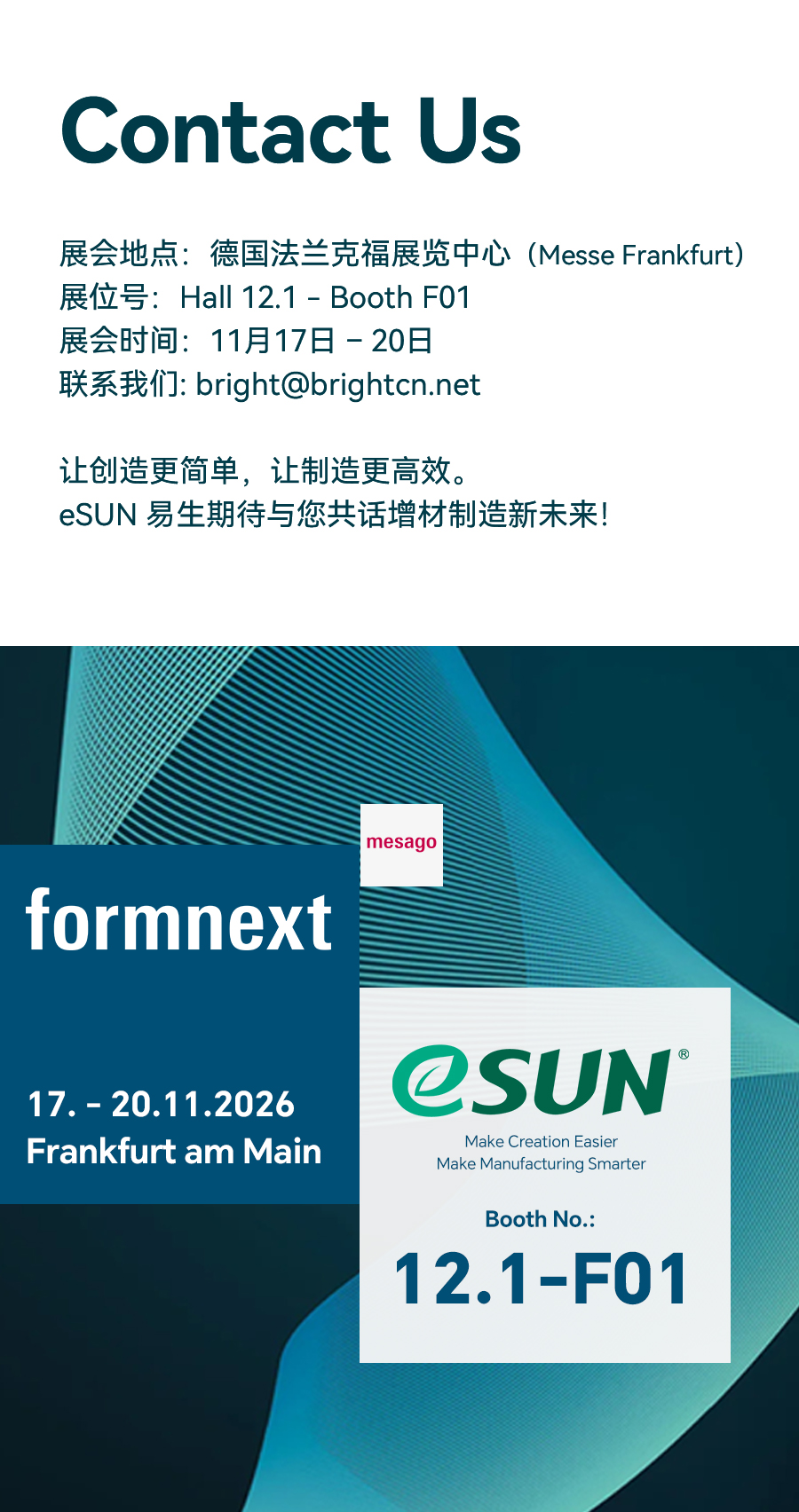
Formnext 2026, a major global additive-manufacturing exhibition, will take place in Frankfurt, Germany, from November 17 to 20. As 3D printing gains ground in industrial manufacturing and consumer markets, materials companies are competing through integrated, application-specific solutions rather than formulations alone.
Nanjixiong learned that eSUN announced its exhibition lineup under the theme “Make Creation Easier, Make Manufacturing More Efficient.” It will show an ecosystem spanning humanoid robots, 3D-printed shoes, ultra-high-speed printing, and specialty engineering materials.
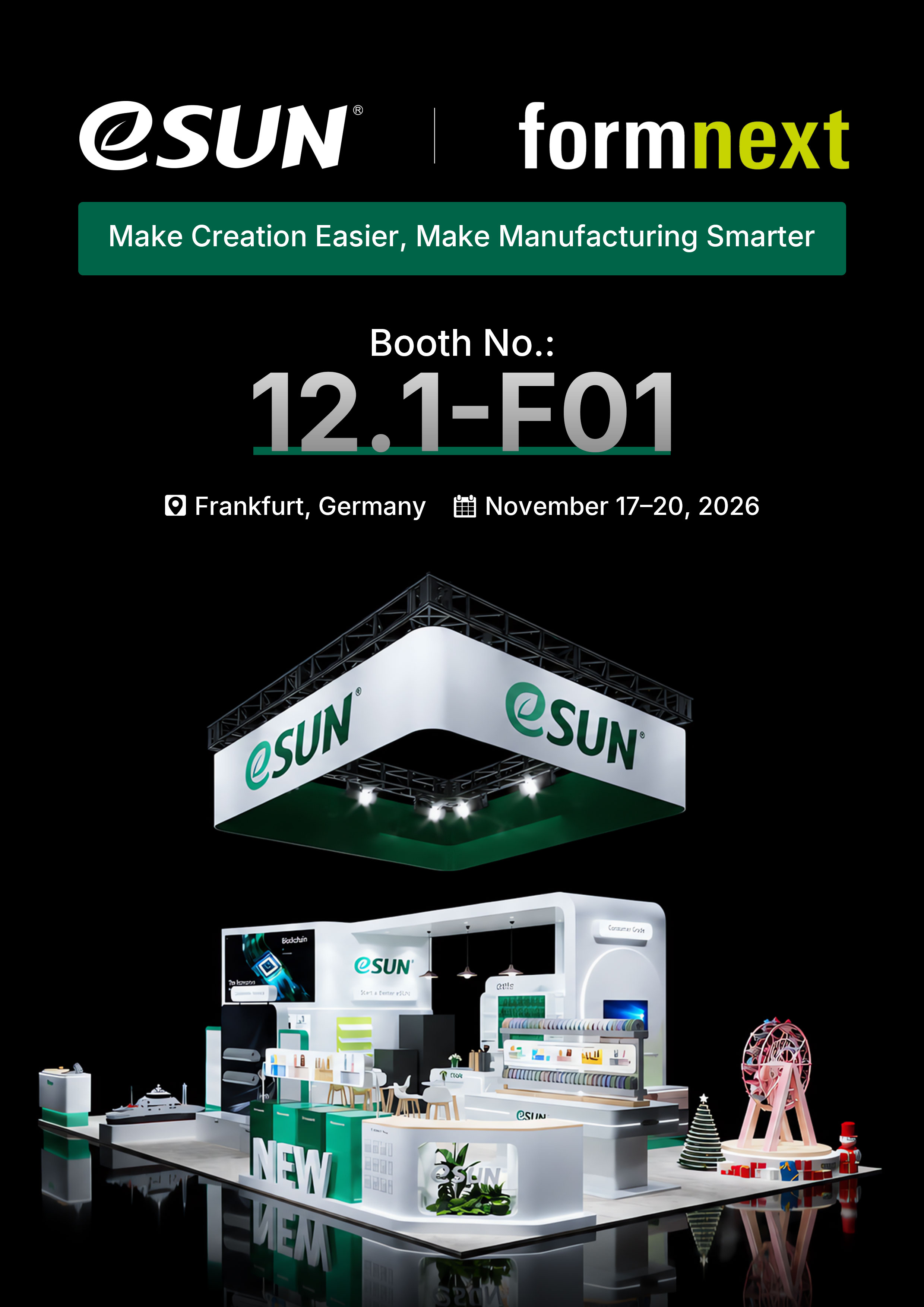
An application ecosystem: from robots to customized footwear
eSUN will highlight the use of its materials in several emerging applications:
- 3D-printed humanoid robots: combining FDM and photopolymerization with rigid engineering materials and flexible elastomers to offer an integrated materials solution for lightweight construction and dynamic response, supporting development of high-precision robot parts.
- Complete 3D-printed footwear solutions: from digitally customized foot-health products such as insoles to one-piece shoes, linking flexible materials, high-speed printing, and foot biomechanics for sports wearables and rehabilitation.
- Trend toys and artistic creation: high surface detail and print quality support creative design and production-ready prototyping for cultural products, film props, and high-end art installations.
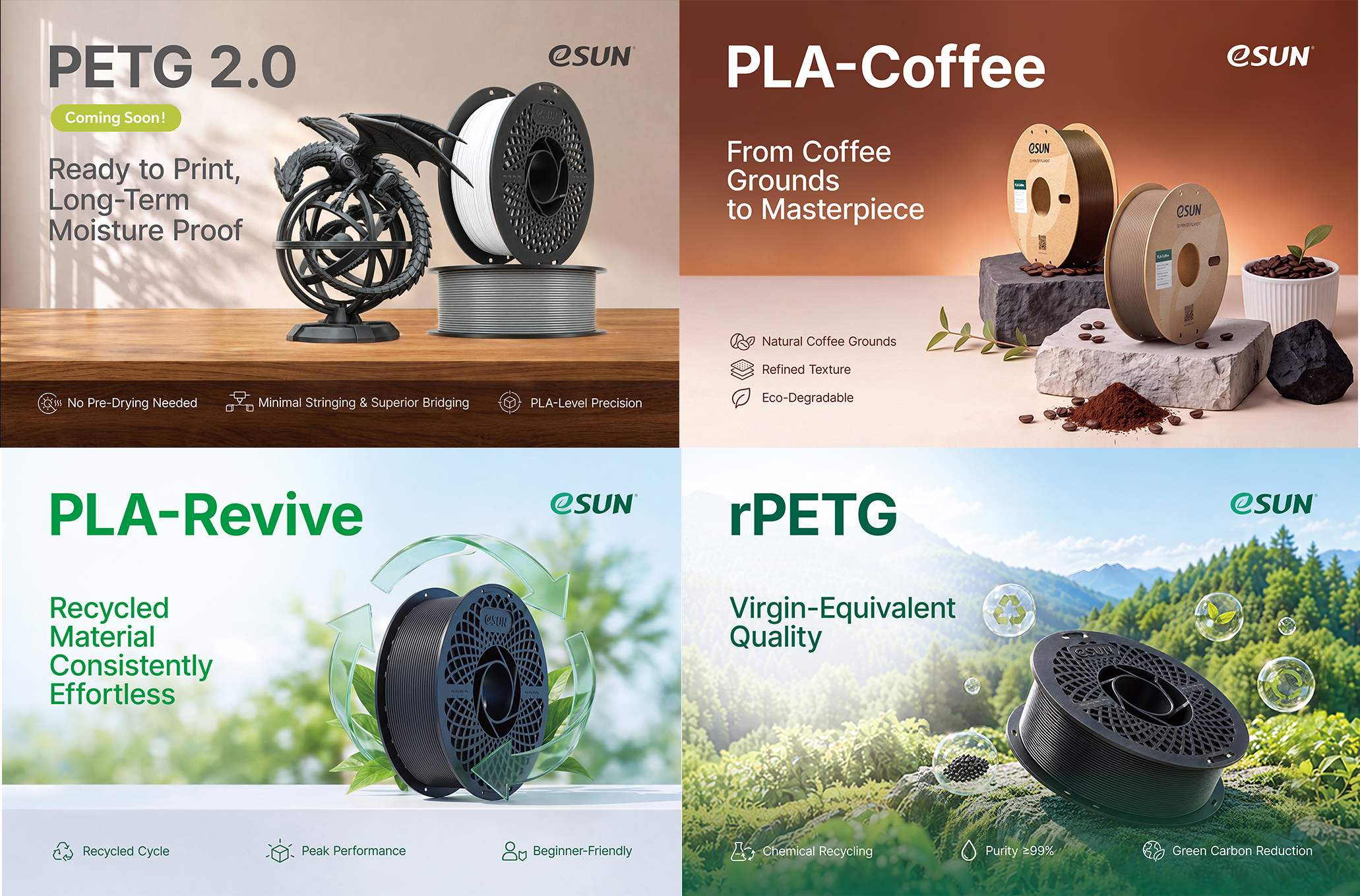
Industrial materials portfolio balancing flexibility and specialty functions
The materials area is a key focus, with an industrial portfolio that includes:
1. High-performance flexible materials: PEBA, TPU, and TPE filaments plus high-rebound photopolymer resins. Applications range from lightweight, high-rebound sports footwear to abrasion- and fatigue-resistant automotive seals and industrial damping structures, providing a flexible-manufacturing solution across multiple processes and hardness ranges.
2. Multifunctional engineering and specialty materials: carbon-fiber-reinforced, antistatic, flame-retardant, foaming/lightweight, heat-resistant, and medical-grade materials for demanding requirements in automotive, UAV, electrical/electronic, and other applications.
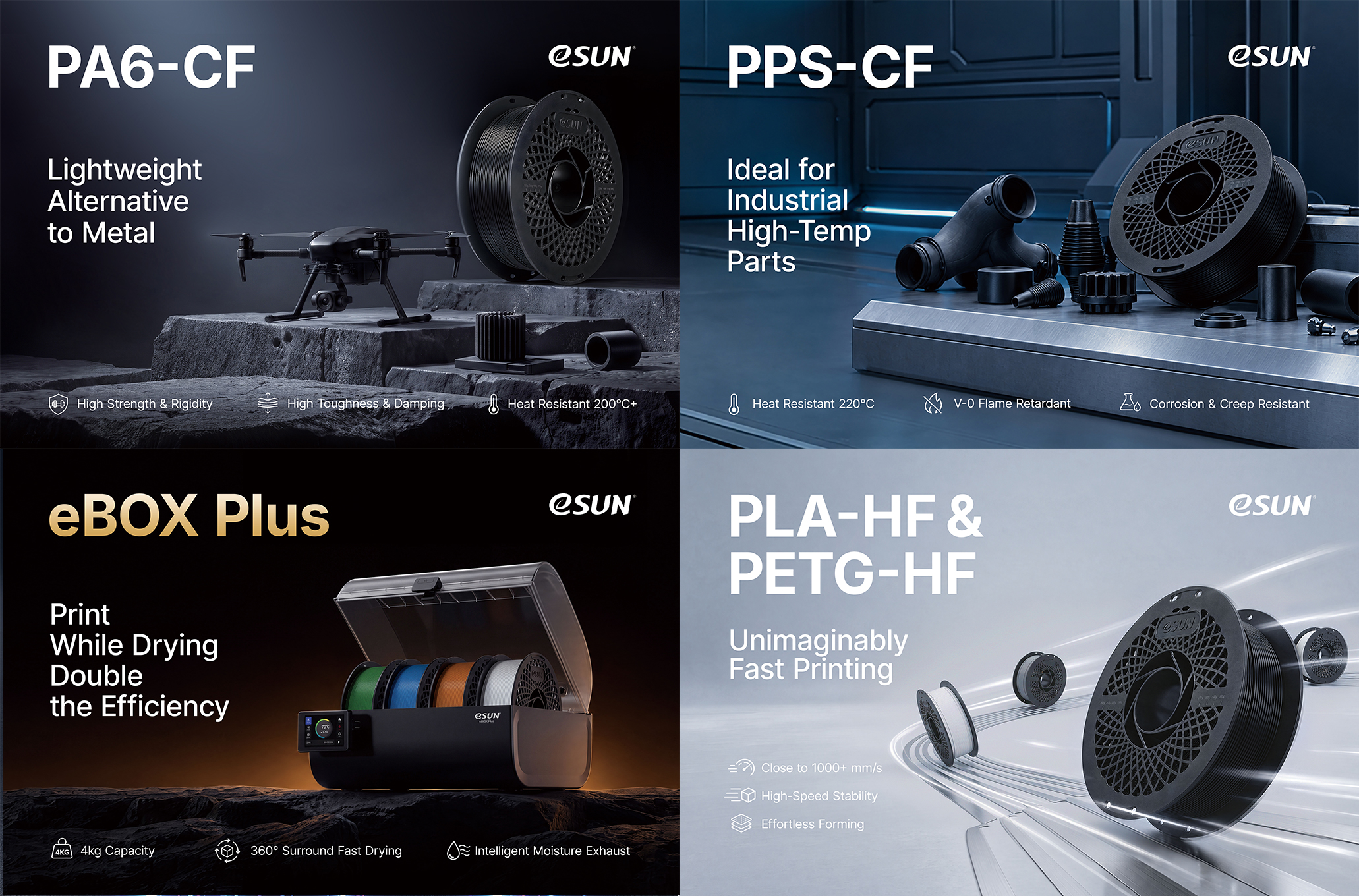
Extreme productivity and new aesthetics through hardware-material coordination
For the shift toward faster equipment, eSUN will bring several solutions:
- Ultra-high-speed printing series: supports speeds up to 1,000 mm/s and is adapted to next-generation industrial and consumer high-speed printers, aiming to balance extreme extrusion rates with strong interlayer bonding.
- Trend and aesthetic materials: PLA Coffee, transparent PETG, color-changing materials, and a broad color portfolio for designers and makers.
- Smart material-drying ecosystem: the new eBOX Plus active filament dryer uses a precision closed-loop temperature and humidity control system to remove moisture from materials and prevent stringing and bubbles, supporting stable, high-precision, long-duration prints.
Nanjixiong's view: materials companies are beginning an “ecosystem race”
The Formnext preview shows a clear shift: leading materials companies are moving from suppliers of consumables to builders of application ecosystems.
Materials R&D is increasingly tied to processes such as combined FDM and photopolymerization and to popular end-use areas such as humanoid robots and custom footwear. At the same time, materials must keep pace with faster printers, and companies are beginning to fill gaps in the surrounding ecosystem with products such as the eBOX Plus smart dryer.
At Formnext 2026, the complete materials loop—from front-end design through material forming and post-print drying—is a development worth watching.
AI-translated from an article by Xiaoruanxiong on Nanjixiong, originally published on 2026-11-11. Text and images retain the original source attribution.
Read the original Chinese article |


 Record number | ©2024 panda3dp Team. Powered by panda3dp