Introduction: On October 15, 2026, TIME magazine announced its annual Best Inventions list. Two desktop CNC machines drew attention in Chinese technology media: the NestWorks C500 from Shenzhen Chaojiang Technology and the Xhorse3D Xmachine WM-100 from Shenzhen Shuma 3D. While checking the claims, Nanjixiong found a clear difference in how the two machines are listed on TIME's website.
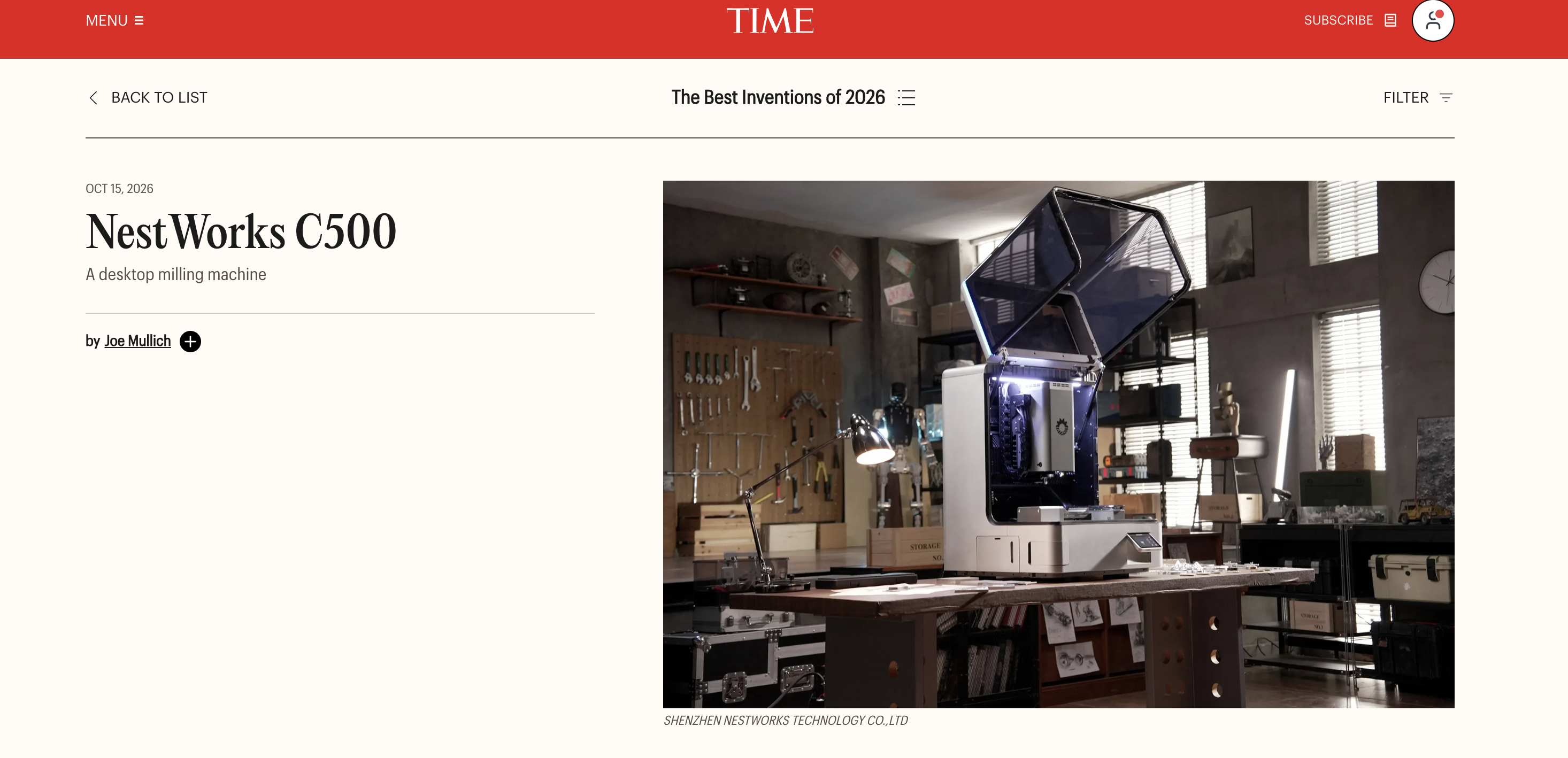
What TIME's website actually says about the two machines
NestWorks C500: a dedicated official page with a clear description
TIME's website has a dedicated page for the NestWorks C500:
https://time.com/collection/best-inventions/2026/nestworks-c500/
The official description says: "Compared with traditional large metal CNC machines, the compact NestWorks C500 fits directly on a desktop yet can precisely machine titanium and stainless steel, with accuracy down to one-third the width of a human hair. It also simplifies complex machining preparation such as tool selection and cutting-path alignment, making CNC machining less dependent on operator experience."
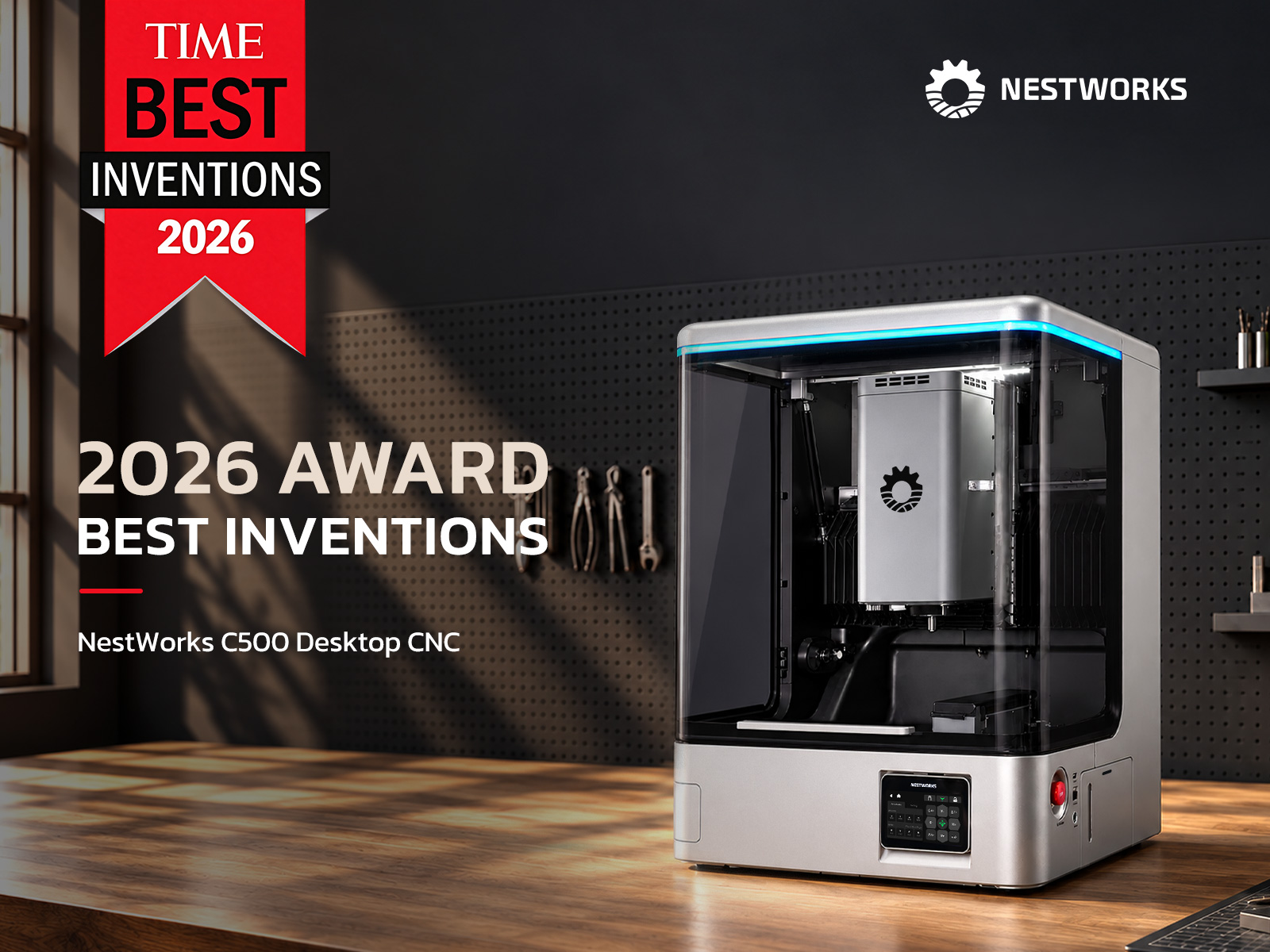
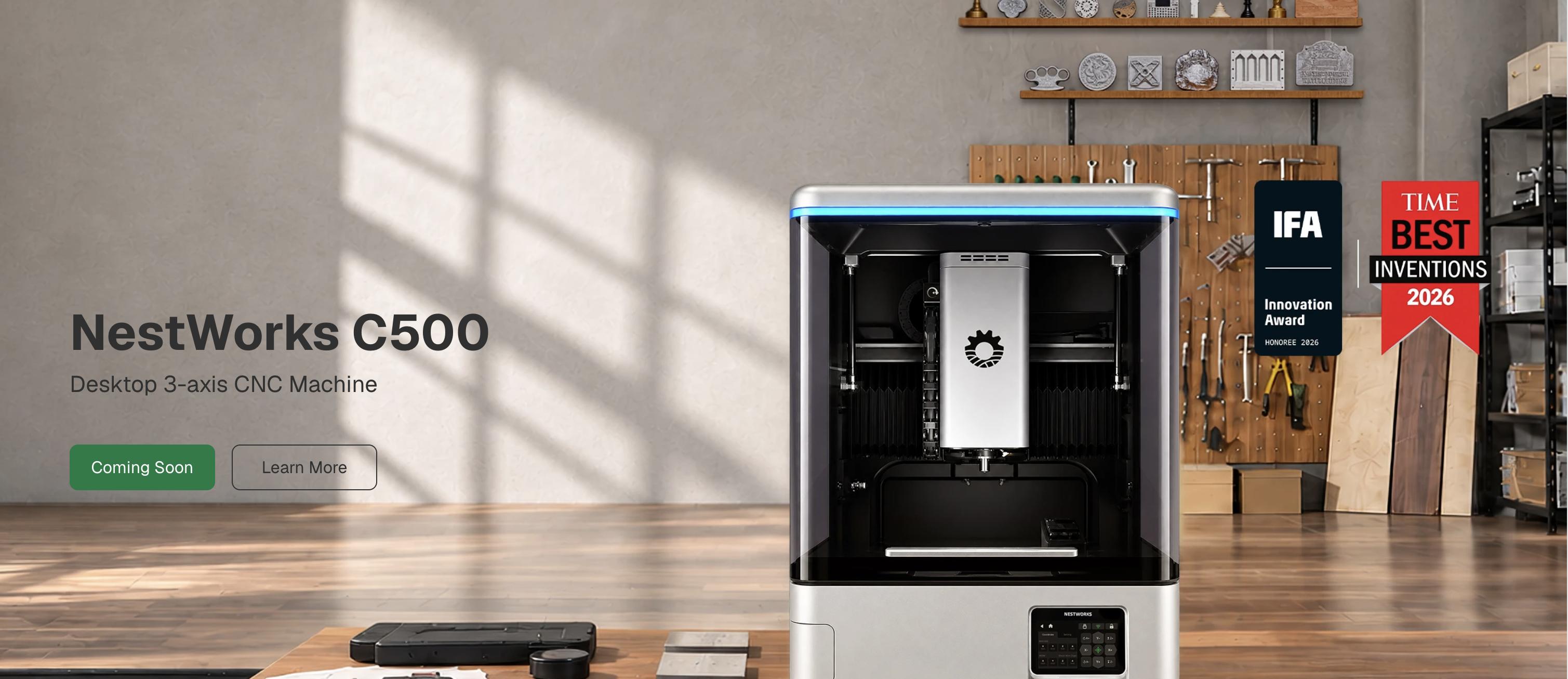
Key C500 specifications include an 800 W industrial spindle, up to 18,000 RPM, and ±0.02 mm accuracy. It can machine aluminum, brass, copper, plastics, hardwood, titanium alloy and mild steel. The machine weighs about 91 kg and has a 230 × 213 × 128 mm work area. Its proprietary Smart CAM system reduces a traditional setup process of 50–70 steps to three or four clicks, automating edge finding, tool setting, tool changes and RFID tool management. It raised more than $13 million on Kickstarter, then completed several hundred million yuan in angel and subsequent financing. Investors include Sequoia China, BlueRun Ventures, ZHONGDING Capital, Vertex Ventures China and Vision Plus Capital.
Xhorse3D Xmachine WM-100: no dedicated page found on TIME's website
Nanjixiong searched TIME.com for WM-100, Xhorse3D and Xmachine, but found no results. The related Chinese coverage currently available, such as a video page on maker3d.com.cn, does not provide a link to an original page on TIME.com.
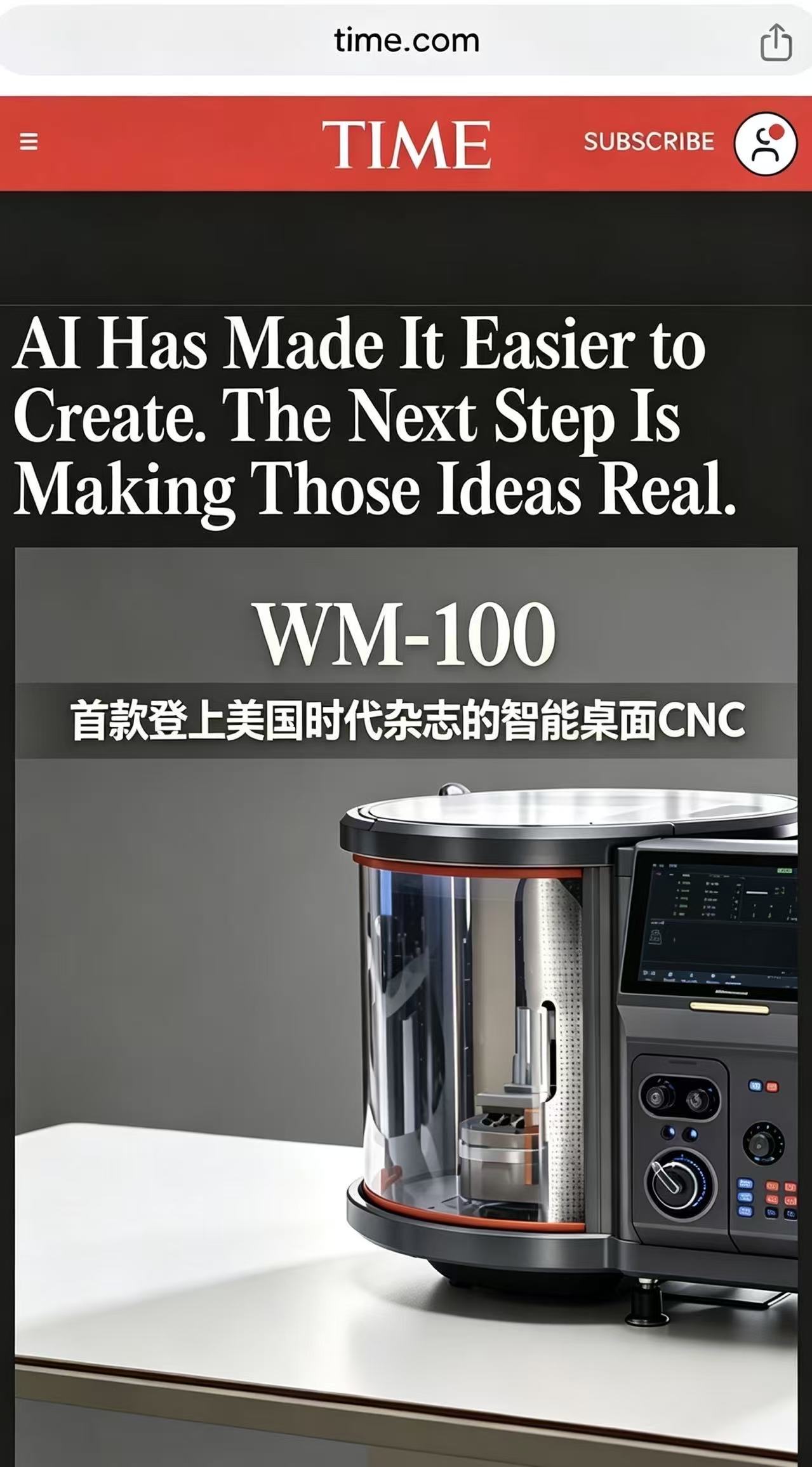
The WM-100 is a desktop CNC machine from Shenzhen Shuma 3D Technology. It features true five-axis RTCP simultaneous motion, a 1,500 W, 20,000 RPM spindle, ±0.01 mm repeat positioning accuracy, more than 97% localization of core components, and a built-in six-position tool magazine. Its proprietary XMakerHub AI platform can generate machining paths from text or images in one click. The price in mainland China is RMB 59,800; overseas early-bird crowdfunding starts at $5,899. It has raised more than $3 million on Kickstarter.
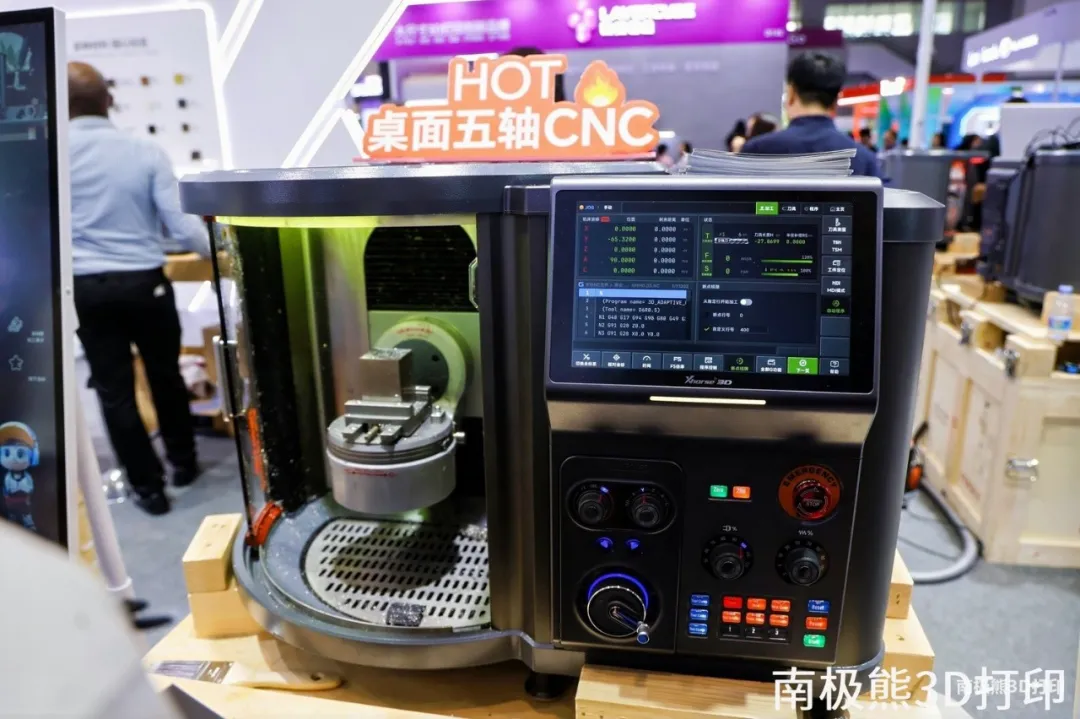
Both machines have been described in Chinese coverage as the "first to appear in TIME." Nanjixiong considers that the discrepancy may come from differences in award categories, differing interpretations of "first," or simplification during media coverage.
Why now? Desktop CNC is following a path already taken by 3D printing
In Nanjixiong's view, regardless of the details of TIME's listings, one trend is clear: desktop CNC is following a path already validated by consumer 3D printing.
First, crowdfunding figures demonstrate demand.
In 2025, seven Kickstarter projects raised more than $10 million; two were in desktop CNC: the Z1 from ZaoWu Times and the C500 from Chaojiang Technology. In 2026, InfiMake's five-axis K1 raised more than $4 million after launch, while Shuma 3D's WM-100 raised more than $2 million in less than five hours. This closely resembles the trajectory of Bambu Lab's X1, which raised nearly RMB 55 million in its first month on Kickstarter.
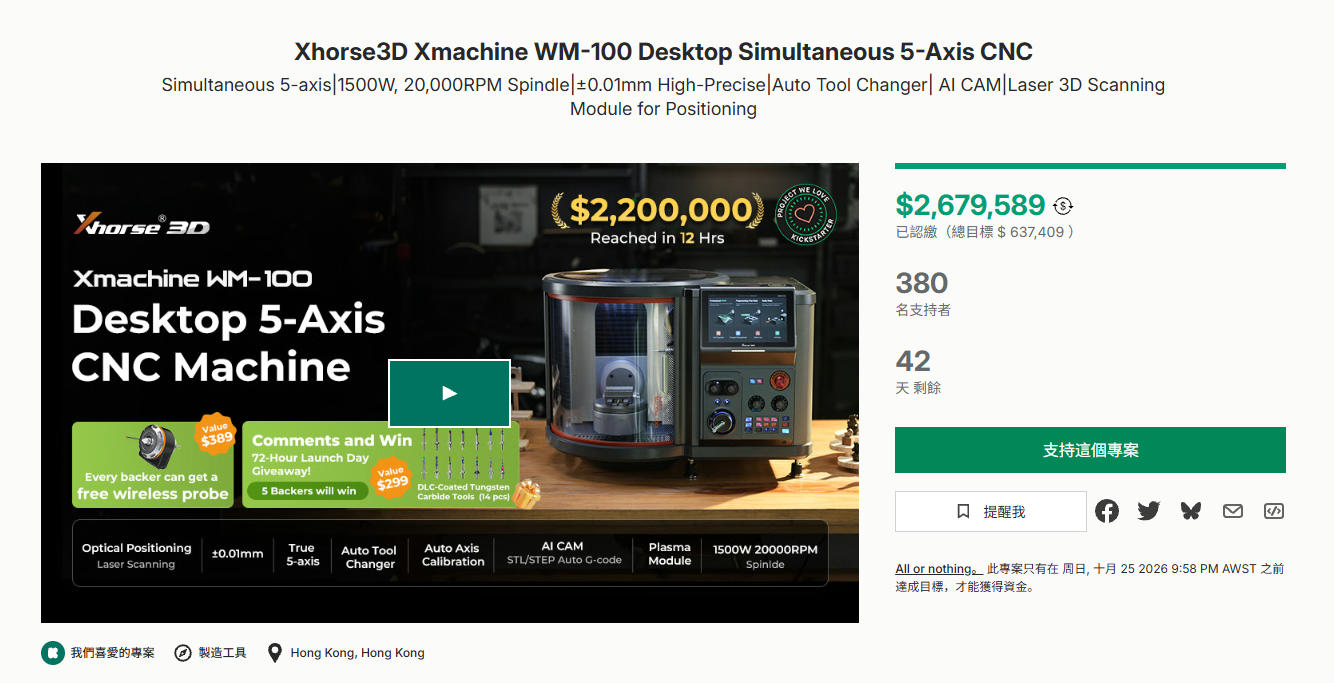
△ Shenzhen Shuma Xmachine WM-100 five-axis CNC crowdfunding page
Second, the founding teams have strongly overlapping backgrounds.
Many desktop CNC founders come from the DJI ecosystem. Wang Hao, founder of Yongquan Innovation, previously led DJI's LiDAR product; InfiMake was founded by several former core DJI employees. These teams bring consumer hardware product thinking into manufacturing tools, following a path similar to Bambu Lab and Creality in 3D printing.
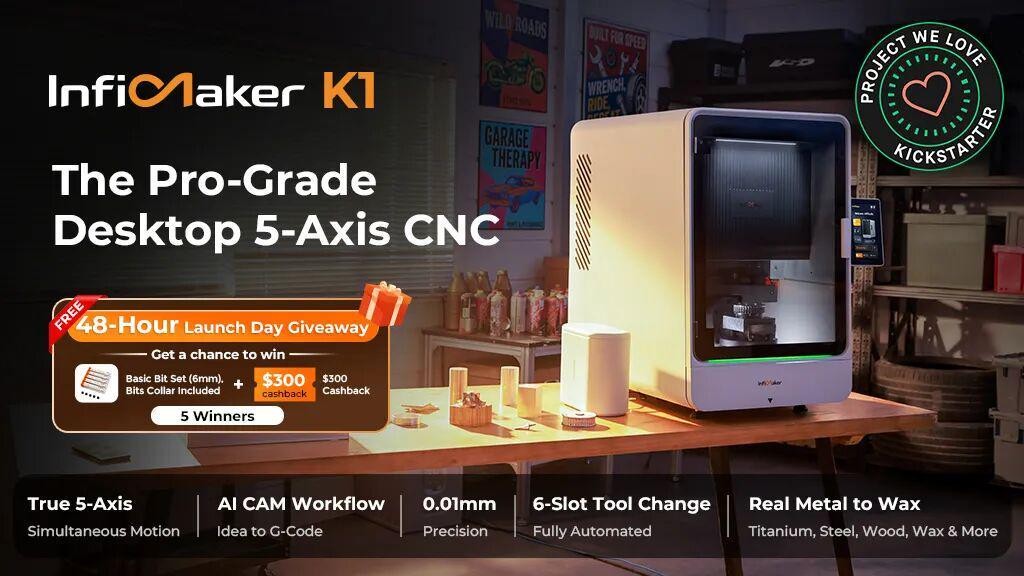
△ InfiMake K1 five-axis desktop CNC
Third, AI is becoming the key lever for lowering the barrier to entry.
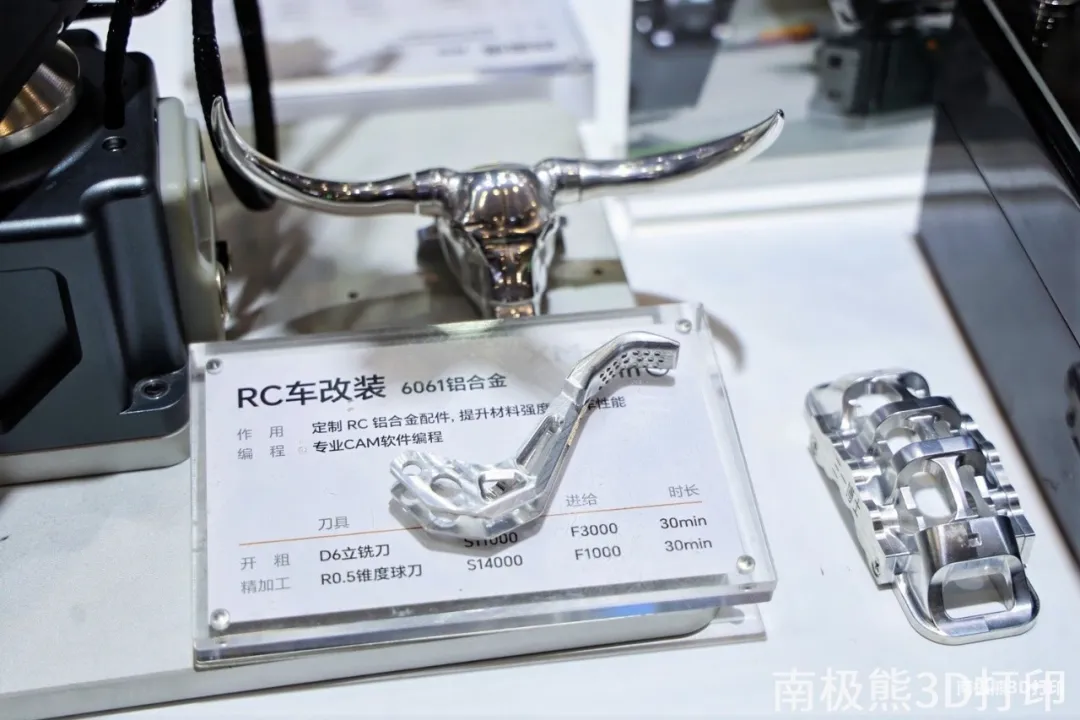
The biggest hidden barrier in traditional CNC is accumulated experience: selecting tools, planning paths, setting parameters and handling exceptions. AI CAM has a role similar to advances in 3D printing slicer software: turning experienced operators' know-how into algorithms. Qisu Technology's proprietary AI CAM system draws on hundreds of thousands of sets of real machining data. TopSolid CNC's TF500 focuses on "uploading an image or entering text to automatically generate a 3D model and plan toolpaths." Chaojiang Technology's Smart CAM reduces 50–70 setup steps to three or four clicks, while Shuma 3D's XMakerHub can generate paths directly from text descriptions.
Could the market be larger than 3D printing?
Research firm FMI estimates that the global desktop CNC market was worth approximately $1.29 billion in 2025 and will grow to $1.89 billion by 2035. More noteworthy is the broader market for personal creative tools—including 3D printers, laser engravers and desktop CNC—which is projected to grow from $6.8 billion in 2024 to $39.1 billion by 2030, a compound annual growth rate of 33.8%, and reach $87 billion by 2035.
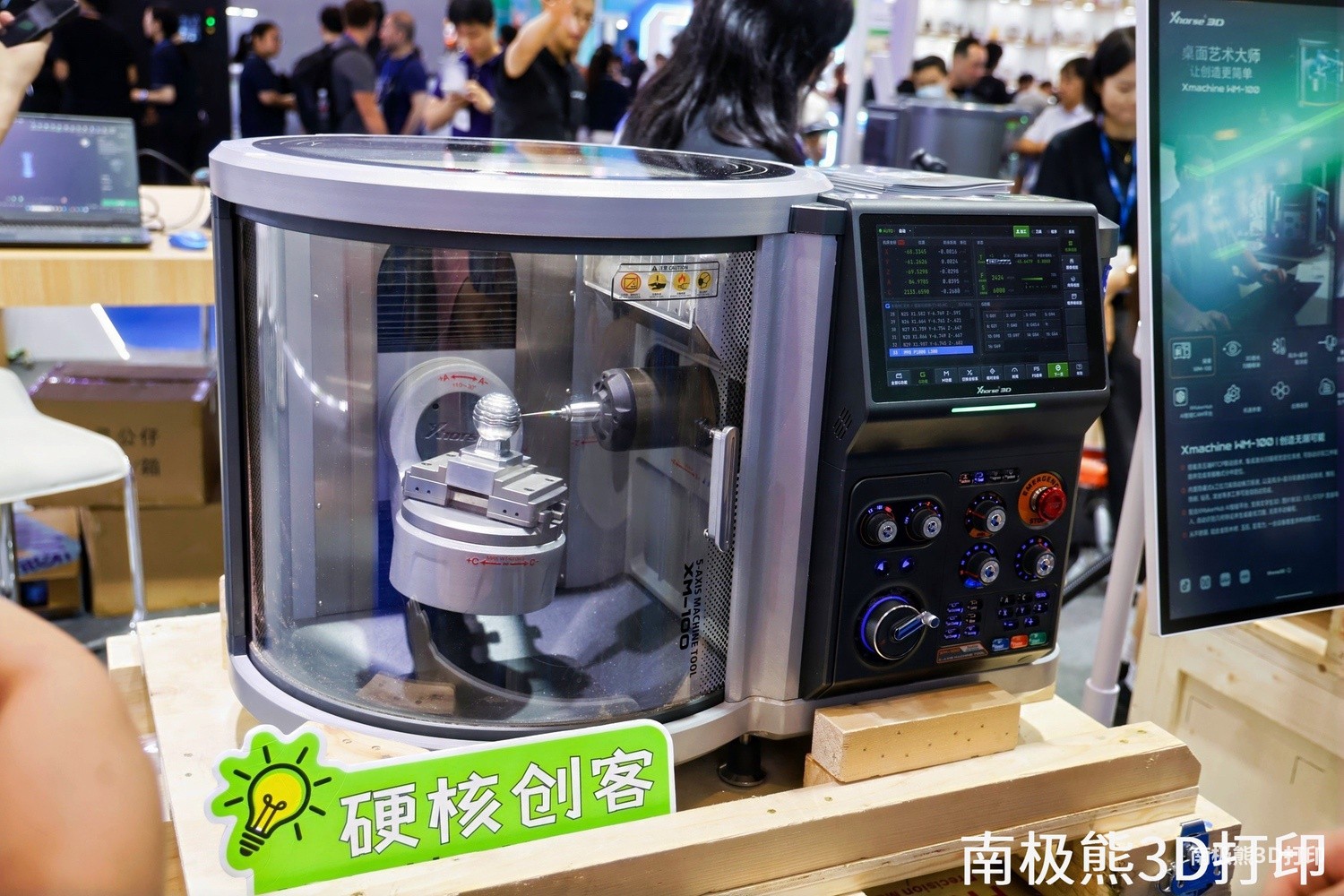
Desktop CNC is addressing needs that 3D printing cannot readily reach. 3D printing excels at complex plastic and resin geometries, but cannot directly machine metal. Desktop CNC can cut aluminum alloy, stainless steel and even titanium alloy. Shuma 3D customers include robotics, robotic-arm and dexterous-hand developers, brain-computer interface companies and biological laboratories. One instrument maker used the XM-100 to machine handmade instrument parts: a job that traditionally cost around RMB 10,000 by hand cost RMB 1,000 with desktop CNC, a 90% reduction.
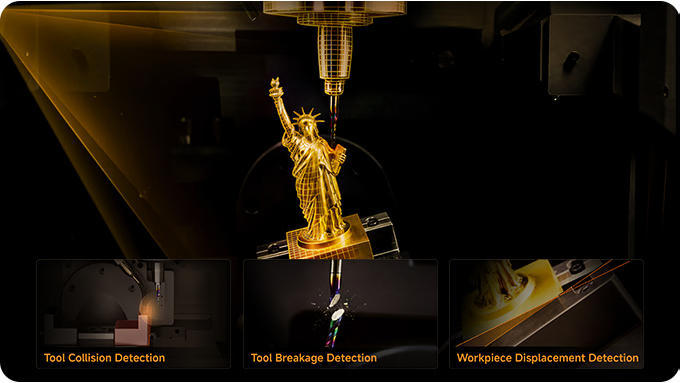
Nanjixiong observation: additive and subtractive manufacturing meet on the desktop
Nanjixiong has long followed personal manufacturing, from 3D printing to laser engraving and desktop CNC. A clear trend is taking shape: the era of a single manufacturing tool is ending, and a "tool matrix" is forming on the desktop.
Snapmaker was among the first to propose a "three-in-one" concept (3D printing + laser engraving + CNC). In September 2026, the Z1 Pro brought a four-in-one desktop manufacturing machine into the $799 price range. This suggests that what users really need is not a better 3D printer, but a complete set of manufacturing capabilities covering everything from plastic prototypes to functional metal parts.
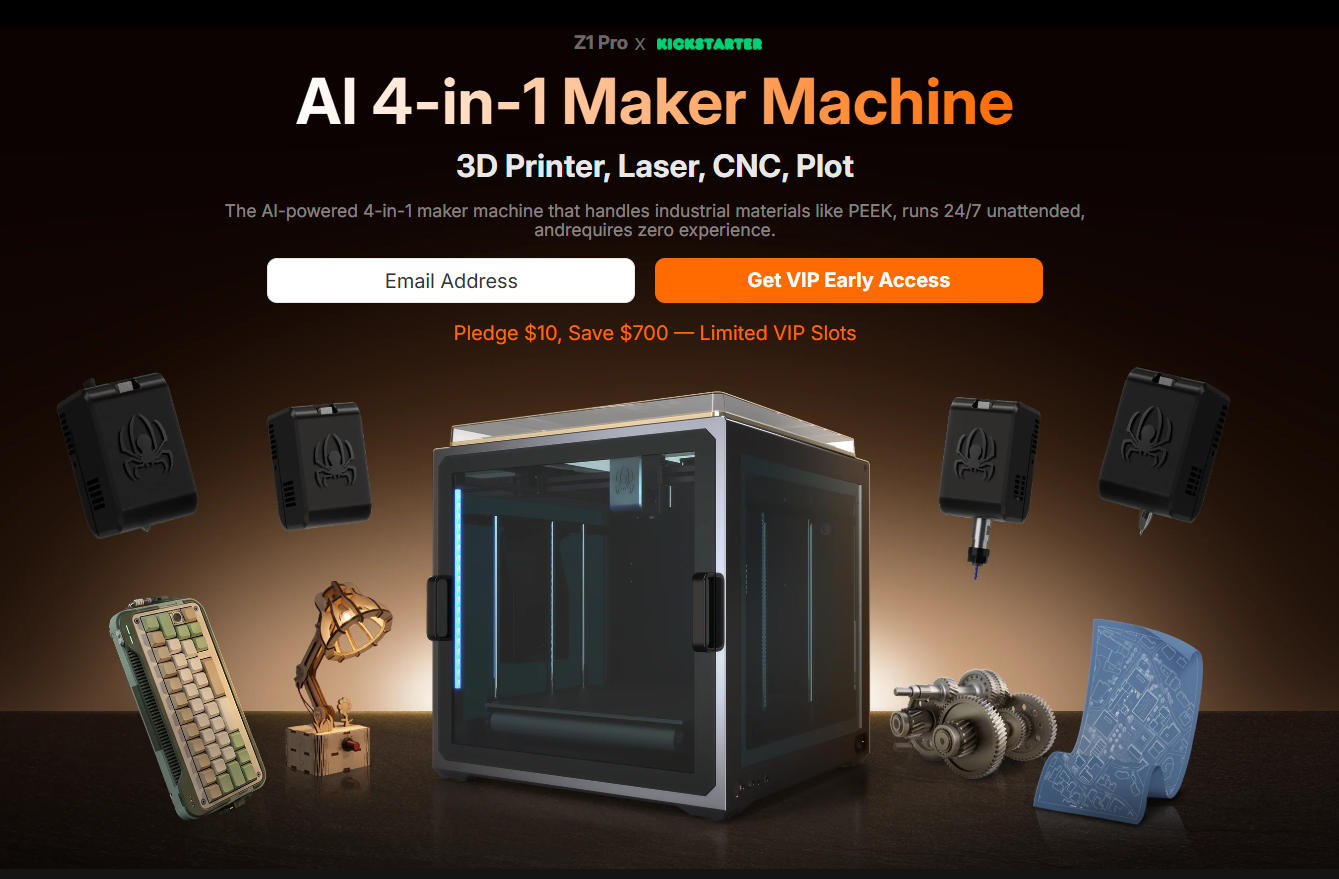
△ ZIVIK Z1 Pro four-in-one machine
The NestWorks C500 and WM-100 represent another route: specialize in one process while making the experience exceptionally accessible. They do not try to solve every problem with one machine; instead, they make metal CNC itself "ready to use out of the box." The two routes can advance in parallel toward the same goal: bringing precision manufacturing from behind factory walls to every creator's desk.
This is still a young market. Desktop CNC users are currently mainly studios, independent designers, hardware development teams and school laboratories; it has yet to become a true mass-market consumer product. Yet consumer 3D printing went from a niche enthusiast toy to millions of units in only four or five years. As AI lowers the experience barrier, crowdfunding validates demand, and investors such as Sequoia and BlueRun—who have made investments in 3D printing—begin backing desktop CNC, confidence in this direction is rising quickly.
Nanjixiong will continue following developments in desktop CNC. One question worth tracking is: when 3D printing, laser engraving and CNC converge on the desktop, what comes next for "personal manufacturing"?
AI-translated from an article by Xiaoruanxiong on Nanjixiong, originally published on 2026-10-16. Text and images retain the original source attribution.
Read the original Chinese article |



 Record number | ©2024 panda3dp Team. Powered by panda3dp