Introduction: TCT Shenzhen 2026 opened on October 14. CNPC Powder exhibited at booth N22, focusing on robotics and new-energy vehicles. It highlighted 3D printed thermal-management solutions using copper- and aluminum-based materials, alongside a full range of metal powders and physical parts covering aluminum, magnesium, titanium, iron-based, nickel-based and copper alloys. The exhibit demonstrated the potential of metal additive manufacturing for efficient heat dissipation, lightweighting and complex structures.
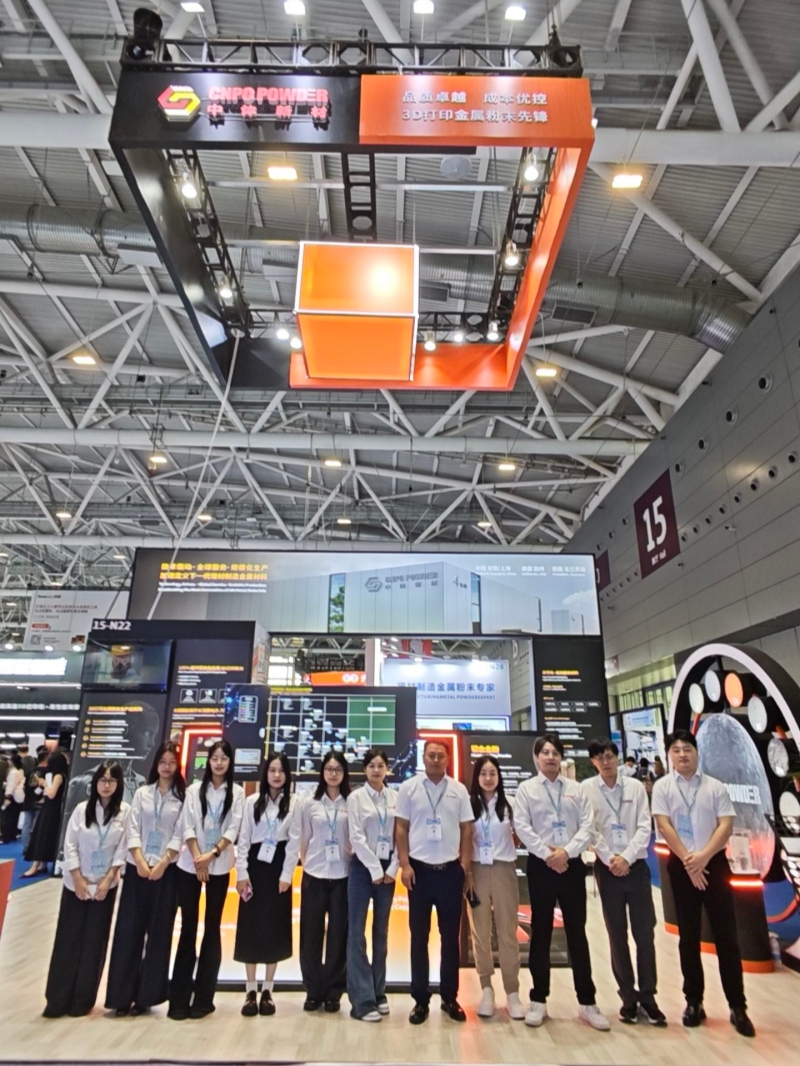
01. 3D printing with copper- and aluminum-based materials for thermal management in robotics and new-energy vehicles
As humanoid robots, new-energy vehicles and high-power electric-drive systems move toward higher integration, power density and lightweighting, core components such as motors, joint modules and electronic control modules require better heat dissipation and space utilization.
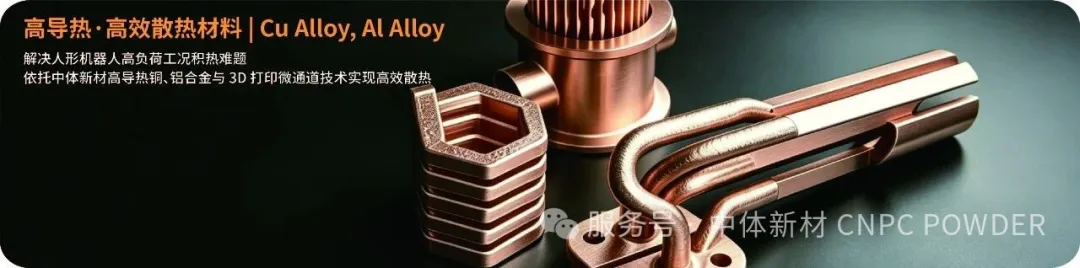
Using pure copper, chromium-zirconium copper (CuCrZr) and high-thermal-conductivity aluminum alloys, combined with metal 3D printing's ability to form complex structures, CNPC Powder is exploring diverse thermal-management applications.
Humanoid robots: Develop compact heat-dissipation structures and internal cooling microchannels for joint modules, motor housings and drive components, improving heat transfer within limited space.
New-energy vehicles: Explore heat sinks, heat exchangers and complex cooling channels for electric drives, electronic controls and high-power electronics, integrating thermal-management structures and optimizing space.
Integrated structural innovation: Coordinate the design and forming of cooling channels and components to reduce assembly of separate structures and enable complex thermal designs that conventional processes cannot achieve.
From robot joints to electric drives in new-energy vehicles, combining copper- and aluminum-based materials with 3D printing offers new approaches to efficient heat dissipation and compact design.
02. Three specialty aluminum alloy powders balance thermal conductivity, electrical conductivity and lightweighting
In addition to thermal-management solutions, CNPC Powder highlighted three specialty aluminum alloy powders with high electrical and thermal conductivity, offering differentiated material options for robot structures, automotive electric-drive and electronic-control parts, and other lightweight components.
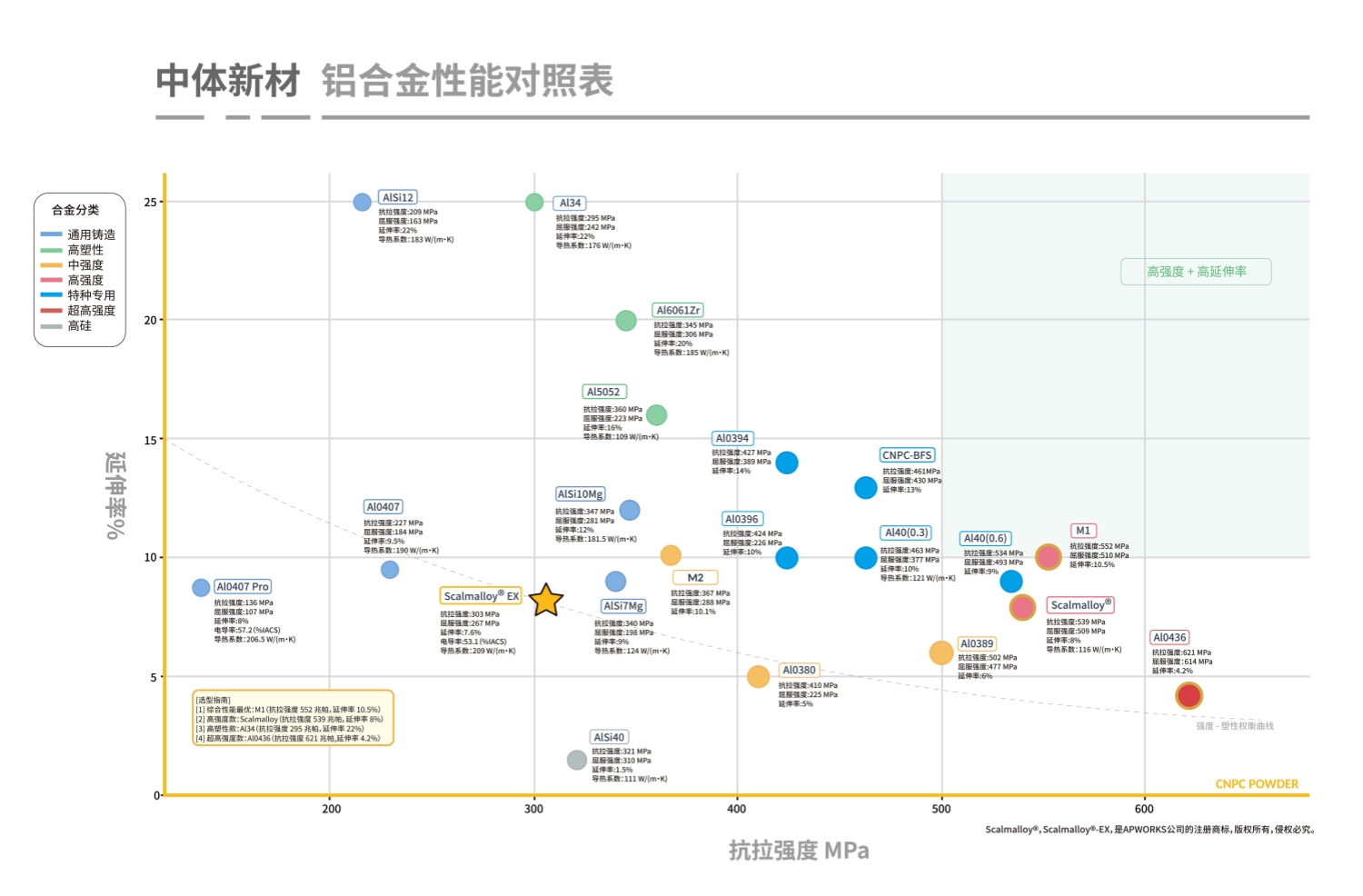
CNPC-Al0407 (Pro) | High electrical and thermal conductivity
Electrical conductivity above 57% IACS; thermal conductivity approximately 206 W/(m·K). Suitable for precision functional parts requiring electrical and thermal conductivity, including electronic-control housings, sensor bases and heat-sensitive components.
CNPC-Scalmalloy EX® | Lightweighting with balanced overall properties
Electrical conductivity above 53% IACS; thermal conductivity above 210 W/(m·K); sphericity ≥90%; oxygen content ≤0.1%. Potential applications include water-cooling plates for new-energy vehicles, electric-drive housings and lightweight robot structures.
CNPC-AlSi10Mg (Pro) | Lightweight structural option using a mature process
Compatible with SLM; part density ≥99.8%; balances strength, ductility, lightweighting and fatigue resistance. Applications include automotive battery-pack structures, chassis brackets, robot housings and structural brackets, and other complex lightweight parts.
The three materials emphasize electrical/thermal conductivity, balanced performance and mature structural applications, respectively, giving customers more options across functional, weight and structural requirements.
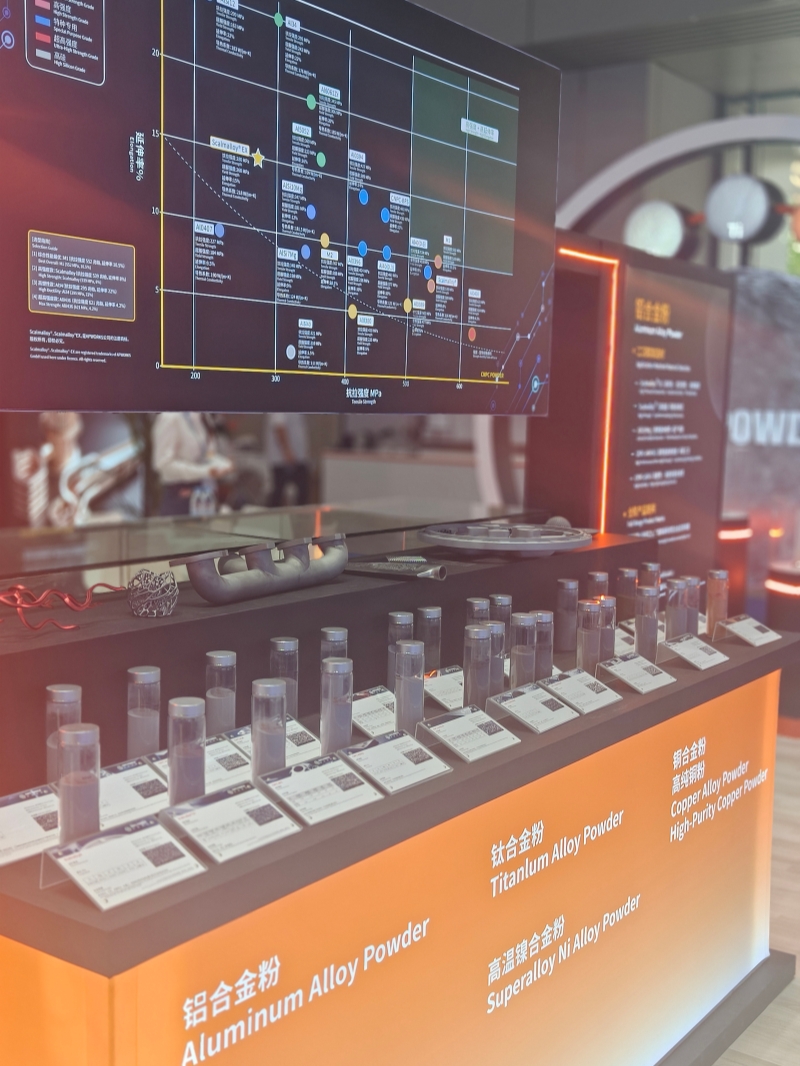
03. Full range of metal powders covers diverse component needs in robotics and automotive
The robotics and automotive supply chains require diverse metal materials, from lightweight frames and load-bearing structures to precision transmission, wear-resistant parts and thermal-management systems. CNPC Powder's product matrix covers aluminum, magnesium, titanium, iron, nickel and copper systems, offering different metal additive manufacturing powders for different components.
Lightweight and high strength | High-performance aluminum and magnesium alloys
CNPC-Scalmalloy® high-performance aluminum alloy powder has tensile strength ≥520 MPa and can be used to develop lightweight, highly loaded structures. CNPC-AZX912 magnesium alloy powder has a density approximately two-thirds that of aluminum alloy, offering more options for moving parts in robots and lightweight automotive structures.
Load-bearing and heat-resistant | Titanium and nickel-based alloys
CNPC-Ti6Al4V titanium alloy powder suits structures requiring high specific strength and load-bearing capacity, including robot joint connectors and other load-bearing parts. Nickel-based alloys are suited to components requiring high-temperature mechanical performance.
Precision transmission and wear resistance | Iron-based alloy series
The product range covers mainstream grades including 316L, 304L, 17-4PH, 18Ni300, H13 and M2. Depending on material properties and operating conditions, they can be developed for transmission-related structures, wear-resistant parts, precision functional components and conformal-cooling molds.
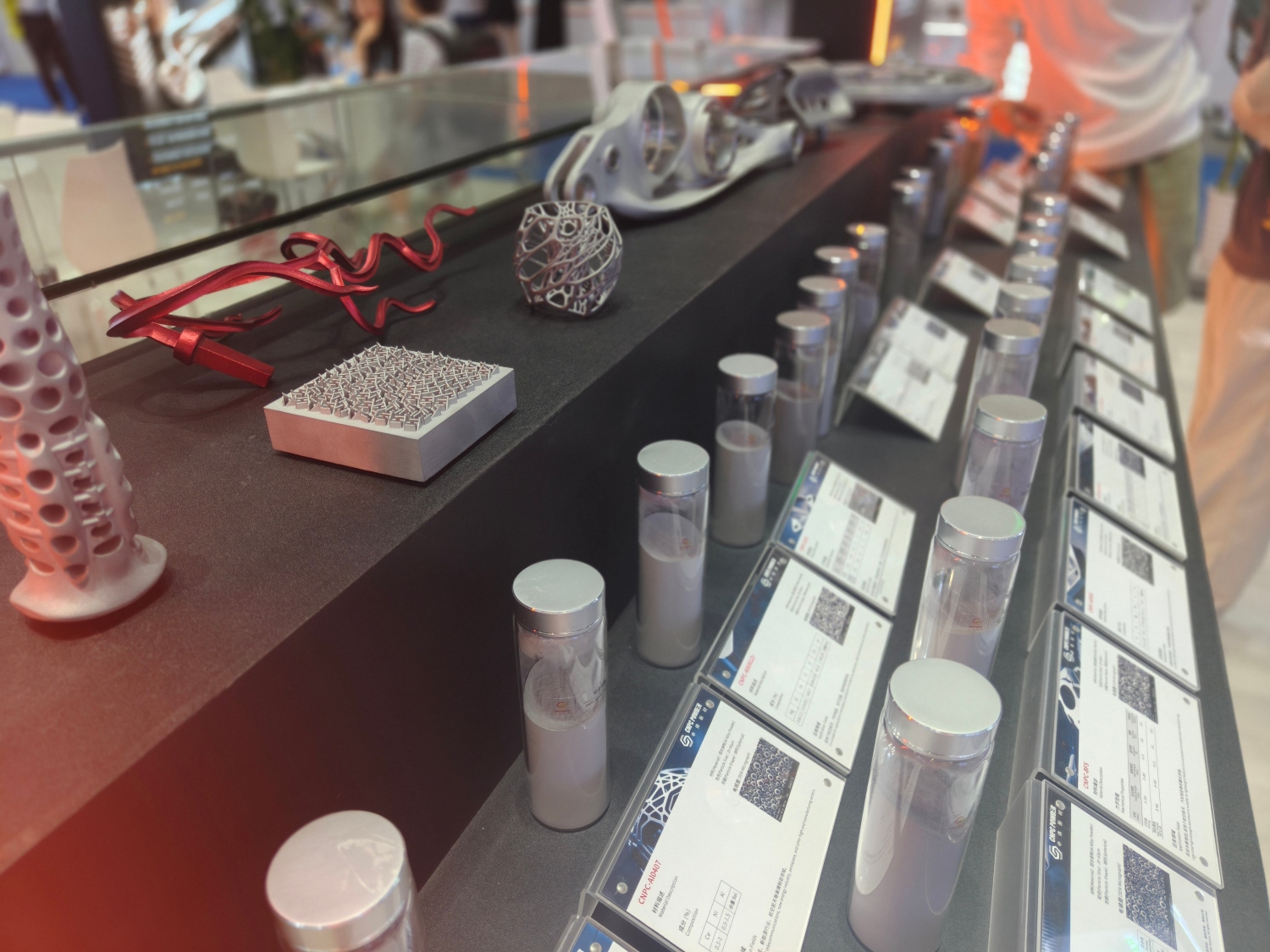
CNPC Powder also displayed physical components at the exhibition, including robotic arms, joint connectors and robot housings, demonstrating the potential of metal additive manufacturing for complex structures and lightweight designs.
From thermal-management solutions to lightweight structures and full-range metal powders, CNPC Powder continues to develop materials for robotics, new-energy vehicles and other high-end equipment, coordinating materials R&D, additive processes and end applications.
AI-translated from an article by Beijixiong on Nanjixiong, originally published on 2026-10-19. Text and images retain the original source attribution.
Read the original Chinese article |



 Record number | ©2024 panda3dp Team. Powered by panda3dp