Nanjixiong introduction
Safety must come before play—an essential lesson as printing enters homes.
3D printing pens are popular in the children's toy market. Several online products sell more than 10,000 units monthly, leading items have exceeded 300,000 cumulative sales, and a gift set ranked among the top five novelty gift boxes during JD.com's 618 promotion.
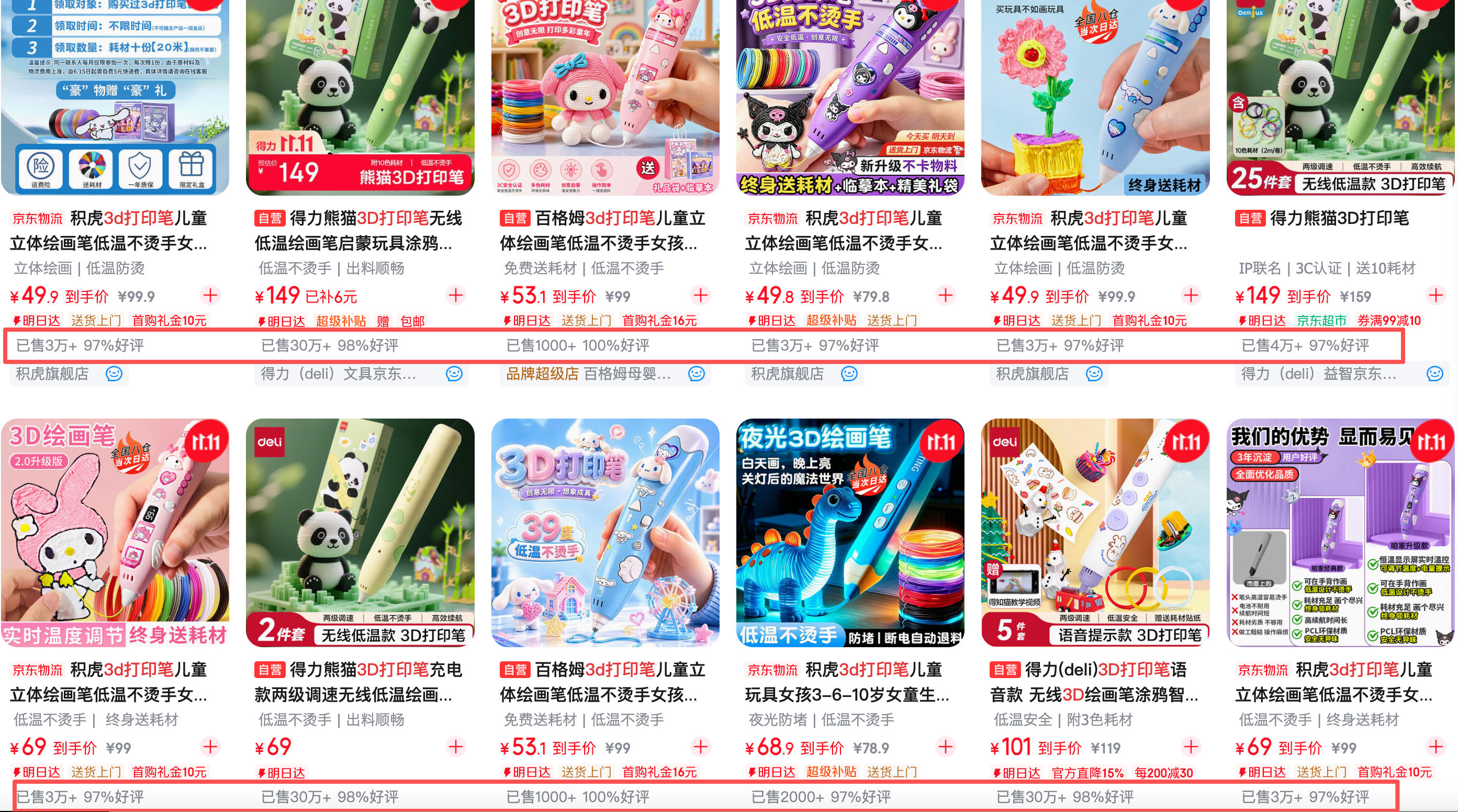
Printing pens ranked by sales on JD.com; the leading item has sold more than 300,000 units.
Safety blind spots should not be overlooked. On October 12, 2026, Nanjixiong learned of a recent CCTV investigation showing that the tip of this creative toy can reach 200°C and that heated materials may release toxic gases. Nanjixiong has previously covered FDM emissions and indoor air quality. The technology's arrival in homes as a toy brings those concerns back into focus.
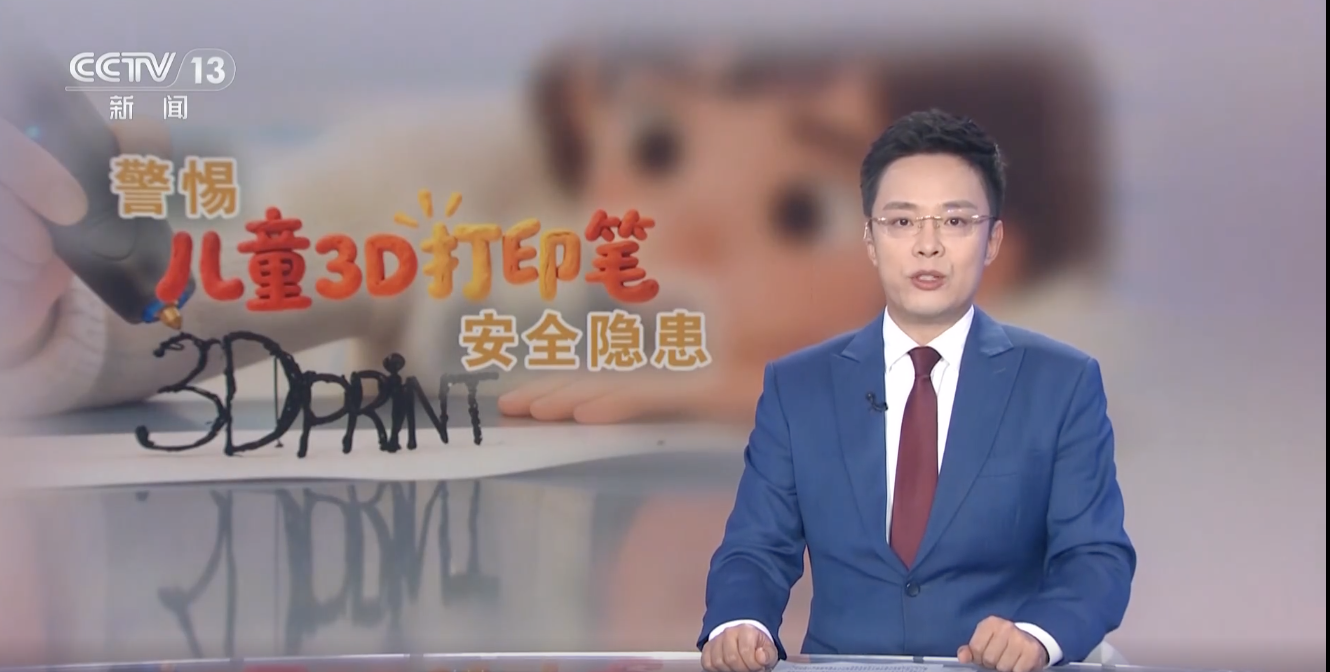
Burns: products labeled for children can exceed 200°C
Pens are classified as low- or high-temperature models. Low-temperature versions typically use PCL, melting at approximately 60°C. High-temperature versions generally use PLA or ABS, with melting temperatures potentially above 170°C. A State Administration for Market Regulation consumer safety notice stated that heating temperatures of 60–70°C are generally a relatively safe range for children's toys.
CCTV found sellers labeling products suitable for children regardless of temperature. One item advertised as a low-temperature children's/student model listed operating temperatures of 65–90°C. Another, with more than 4,000 sales, explicitly said high-temperature and suitable for students and children, listing a maximum material temperature of 230°C.
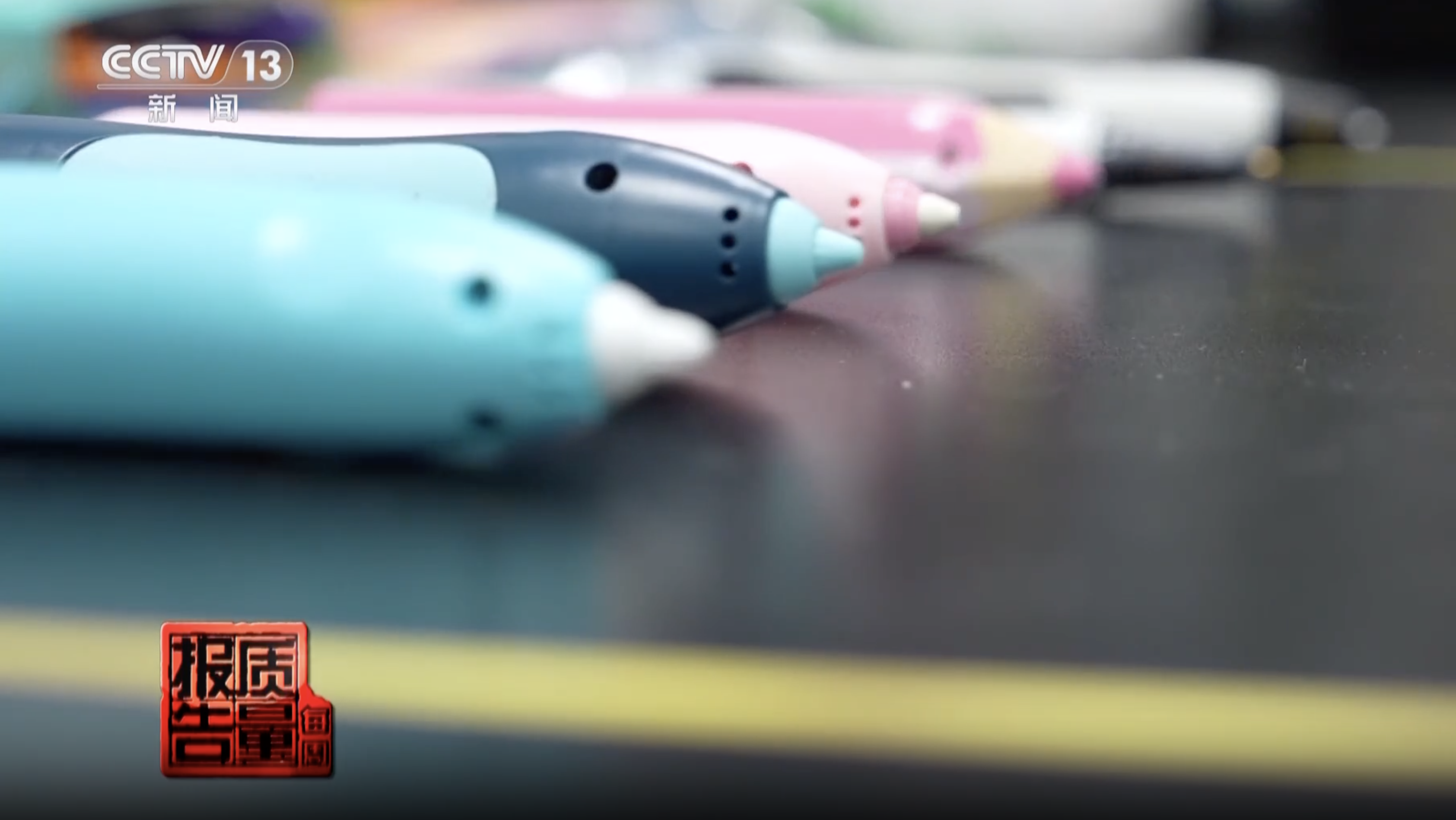
Comparative tests of 20 pens by the Shanghai Consumer Council found high-temperature tips reaching 210°C. Brief contact with pork belly left a visible mark. Low-temperature products also posed risks. Under the national electric toy safety standard cited in the article, plastic tips should not exceed 78°C in room-temperature conditions, but some tested low-temperature products approached 100°C. The council measured low-temperature tips at 73.5–100.5°C, sufficient to cause burns.
Chemical risks: ABS produced the highest TVOC emissions
Heating plastic can release harmful chemicals, a less visible risk than burns.
The Shanghai tests evaluated volatile organic compounds and other chemical parameters against the forthcoming GB 6675—2025 toy safety standards. Most products met the new TVOC limits at room temperature, but behavior differed substantially when heated. High-temperature models presented greater volatilization risks, with ABS releasing the most TVOCs under those conditions.
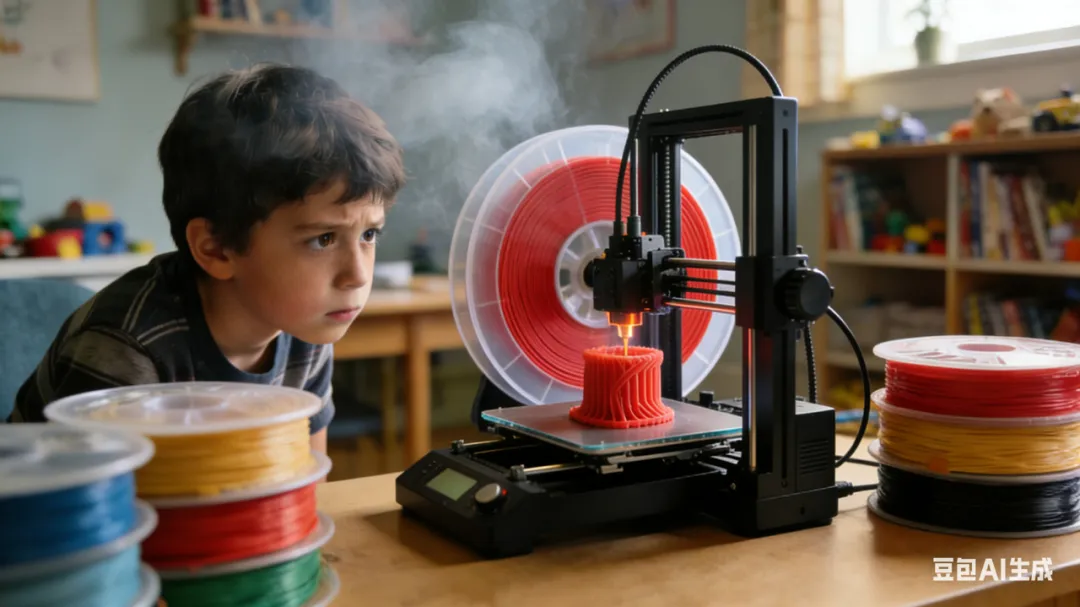
Nanjixiong previously reported that ABS printing has relatively high emissions and may release harmful substances such as styrene. PLA, although marketed as an environmentally friendly bio-based material, also produces ultrafine particles when heated. Pen testing supports those concerns: a pen is essentially handheld FDM equipment, using the same heating principle but manual extrusion instead of layer-by-layer automated deposition.
Earlier Nanjixiong report: Low-price competition and material toxicity could threaten consumer printing and print farms.
Safety guidance in the original article
Nanjixiong emphasizes higher safeguards when printing equipment shares a room with children. Drawing on the council tests and CCTV report, it offers parents the following guidance.
When purchasing
Look for China's compulsory 3C certification and manufacturer name/address, applicable standards and age information. Prefer automatic sleep functions, ideally within five minutes, and overvoltage, short-circuit and overload protection. Use is not recommended below age six. Children aged six to twelve require continuous adult supervision.
Selecting materials
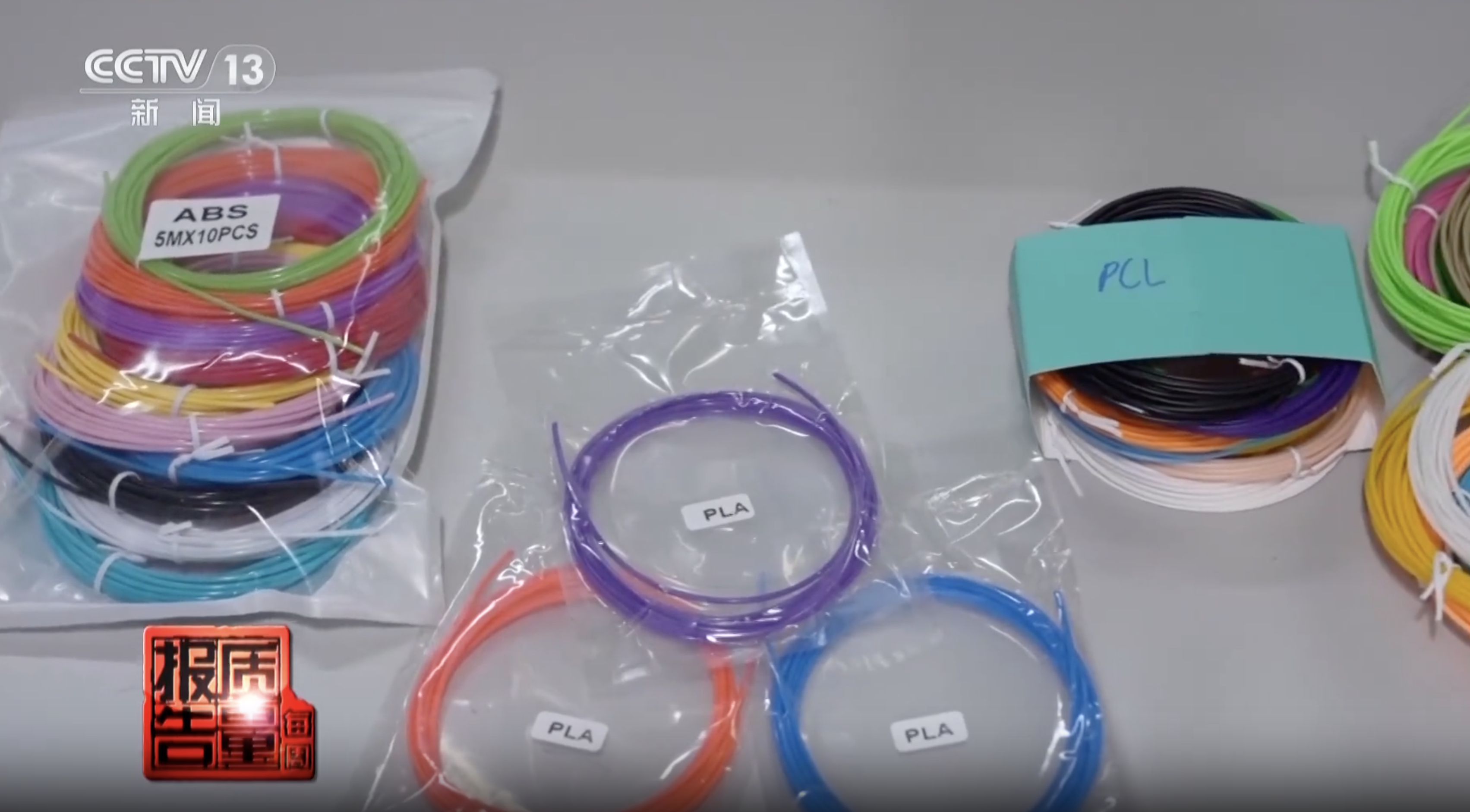
Prefer the same brand's original materials, check safety certification and manufacturer information, and be cautious with unlabeled bulk filament. Avoid ABS where possible for household use. Do not rely on marketing claims such as universally compatible or food-grade filament: printing filament is not a food-contact material.
During use
Use in a ventilated environment rather than enclosed bedrooms, tents or other small spaces. Limit continuous sessions to 30 minutes and turn the device off immediately if an unusual odor appears. Supervise even low-temperature models, instructing children not to touch the tip, bring it near skin or clothing, or bite filament.
When a new pen arrives
Preheat it in a ventilated location to clear odors, and check its appearance and operation.
New national standards will raise requirements
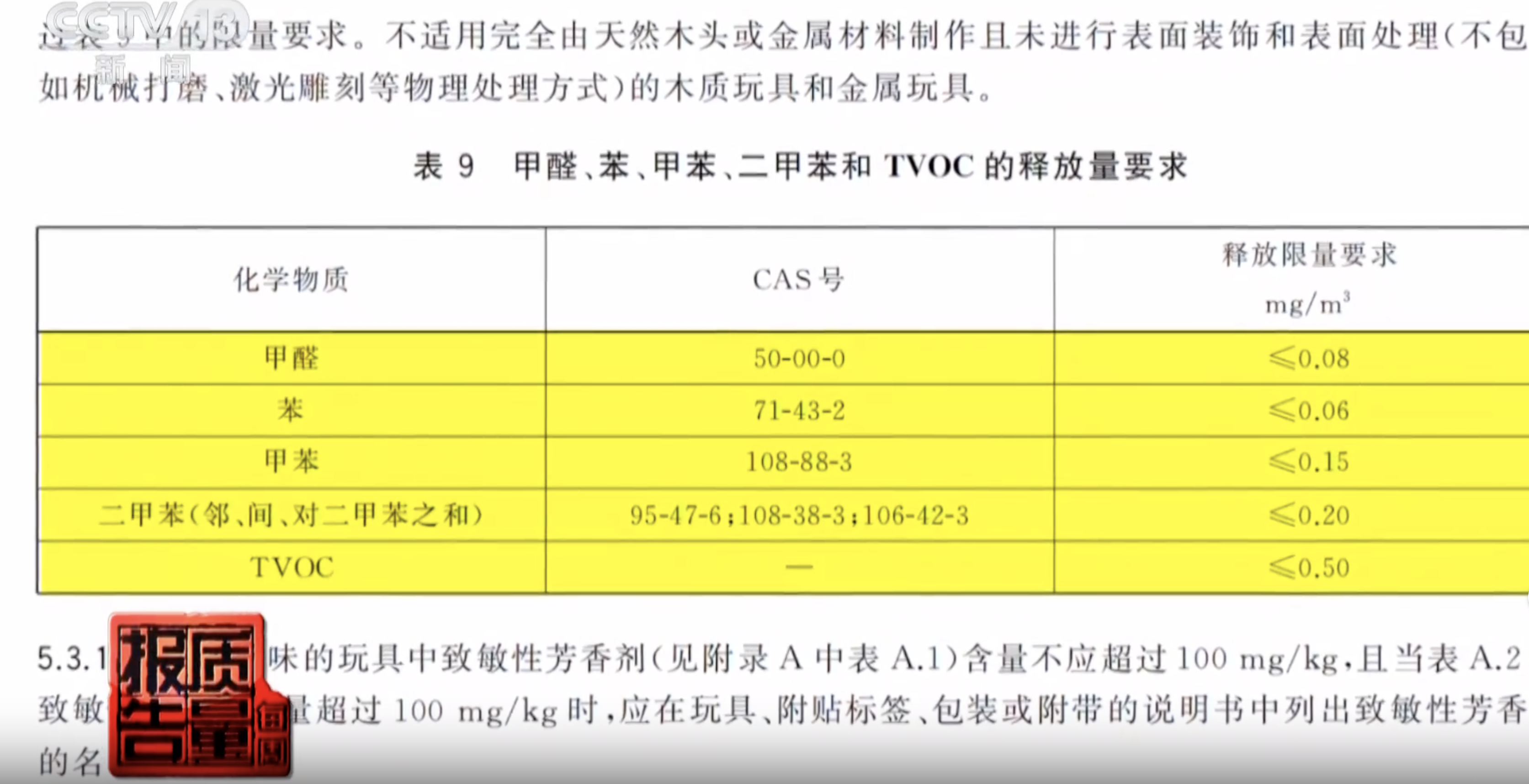
The article states that GB 6675—2025 toy safety standards will take effect on November 1, 2026, while GB/T 19865—2024 for electric toy safety took effect on August 1, 2026. The new standards introduce quantitative limits for formaldehyde, benzene, toluene, xylene, TVOCs and related substances, expand controlled phthalates from six to ten, and place children's 3D drawing pens, associated materials and accessible accessories within toy controls, requiring the complete chemical safety limits to be met.
Manufacturers and material suppliers will face stricter compliance requirements. Nanjixiong considers higher standards beneficial for market order, removal of low-quality products, consumers and the long-term health of consumer printing.
Nanjixiong's observation: a shared responsibility for home printing safety
Pens demonstrate adoption among younger users. Prices from a few dozen yuan to RMB 200 and creation without modeling make the experience accessible and reflect real demand.
That accessibility must not come at the expense of safety. In 2025, Nanjixiong wrote that poisoning, illness or fires associated with home printers would be a serious setback for the entire consumer sector. The concern also applies to pens.
For businesses, sustainable growth requires appropriate safety standards, compliant materials and product design. For parents, a printing pen is not a toy to leave a child using alone. It is handheld heating equipment and should be treated with the same care as a soldering iron or hot-glue gun.
AI-translated from an article by Xiaoruanxiong on Nanjixiong, originally published on 2026-10-13. Text and images retain the original source attribution.
Read the original Chinese article |


 Record number | ©2024 panda3dp Team. Powered by panda3dp