Nanjixiong introduction
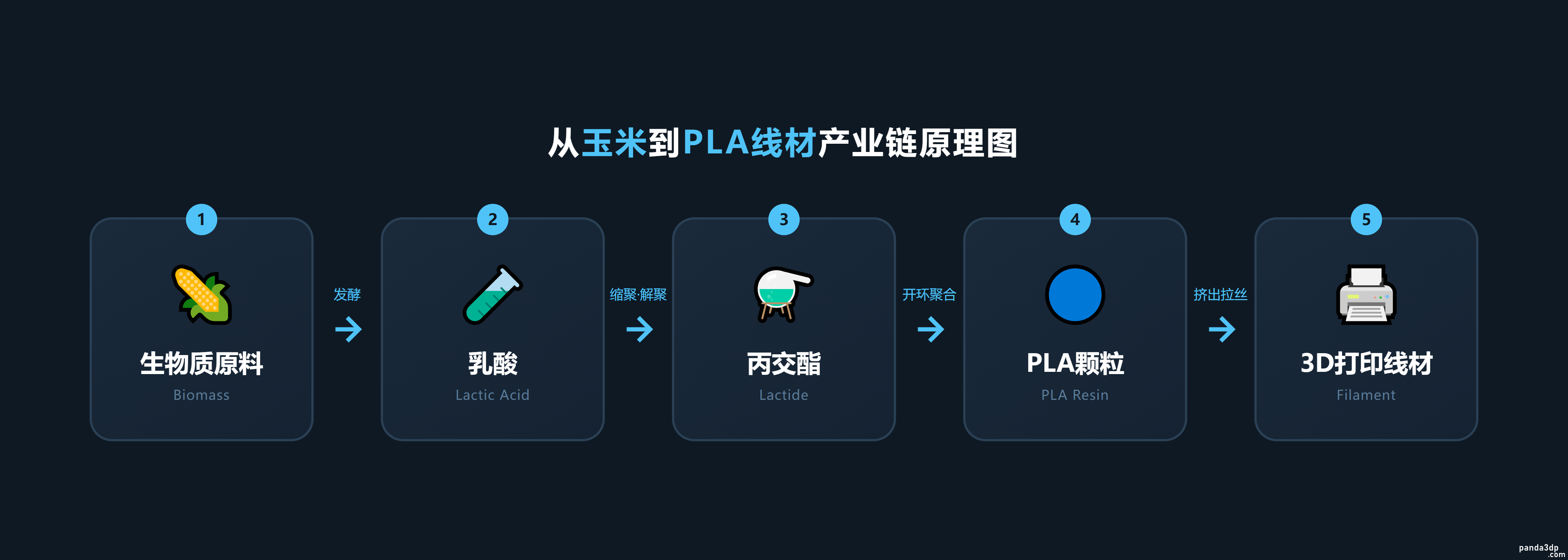
PLA filament sits at the end of a chain running from corn to lactic acid, lactide, polylactic acid and extrusion. Three price increases in one year by a leading upstream supplier may signal a structural supply-demand change rather than a minor consumables fluctuation.
On October 10, 2026, Henan Jindan Lactic Acid Technology Co., Ltd. (300829.SZ) issued a customer letter announcing an immediate 8% increase in prices for its lactic acid product range, including lactic acid and lactates.
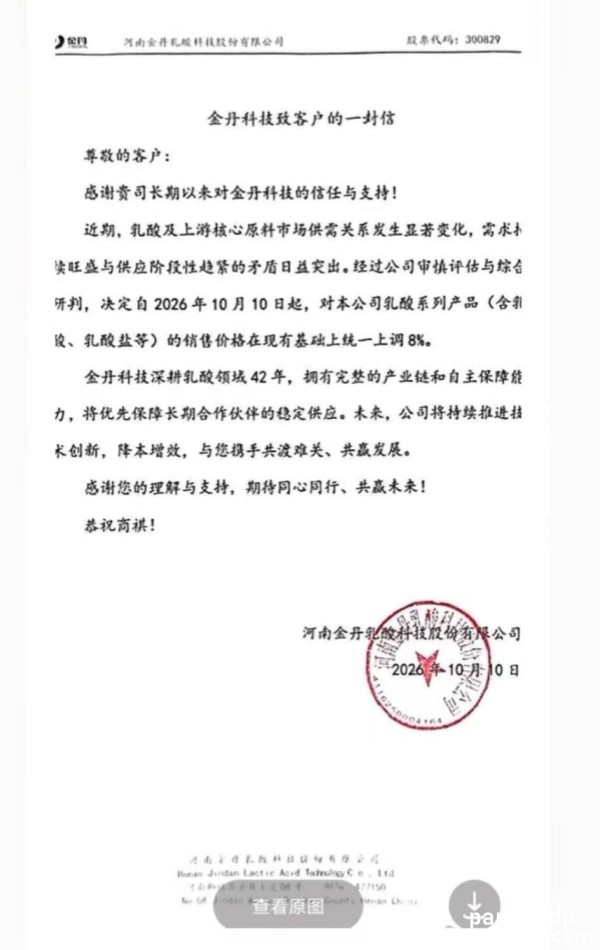
This is its third increase this year, following RMB 500 per tonne on March 11 and another RMB 500 per tonne on July 20. Unlike the fixed earlier increases, the percentage adjustment is larger. The share price was up as much as 9.83% as of 14:16 that day.
Lactic acid: an upstream feedstock for printing materials
Lactic acid may be unfamiliar to printer users, but PLA is the most widely used consumer printing material. Lactic acid is its upstream feedstock.
Biomass such as corn is fermented into lactic acid. Polycondensation and depolymerization produce lactide, which undergoes ring-opening polymerization into PLA. PLA pellets are then extruded into filament.
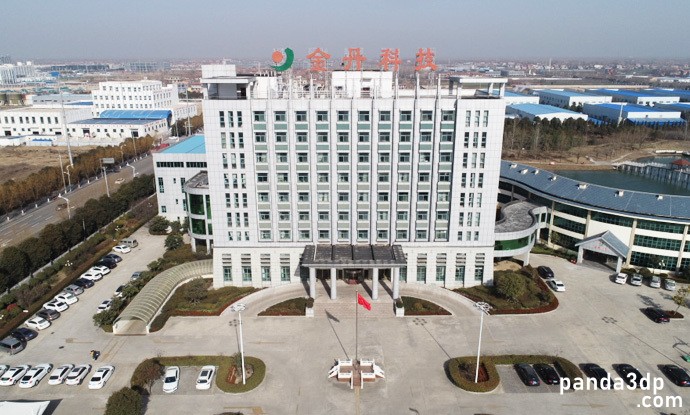
Jindan currently has annual capacity of 233,000 tonnes of lactic acid and related products and is a leading Chinese producer. Increasing demand has brought its lactic acid lines to full utilization. Its RMB 1.03 billion project for 75,000 tonnes of PLA annually was completed on June 30 and entered trial operation, extending the company toward integrated lactic acid and PLA production. A September 21 announcement cautioned that commissioning continued, the production and capacity-release schedule remained uncertain, and no PLA orders had yet been accepted.
Four forces driving repeated increases
The customer letter cited changing supply and demand for lactic acid and key upstream materials, with sustained demand and temporarily tighter supply.

First: growth in printing demand
According to Huatai Securities, global lactic acid capacity was approximately 1.363 million tonnes in 2025. Biodegradable applications, including printing, accounted for 25.6% of demand, with that share rising. Printing-grade PLA increased approximately RMB 700 per tonne in both April and July and another RMB 800 in August. High optical-purity PLA in eastern China rose from about RMB 16,200 per tonne early in the year to RMB 18,100 in September.
Second: restrictions on conventional plastics
Policies in China and other jurisdictions support steady demand for PLA in packaging, agricultural film and disposable tableware. Growth may be gradual, but the demand base is large and resilient.
Third: upstream costs
Corn and sulfuric acid are important inputs. Rising chemical prices have increased production costs. Jindan's first-quarter 2026 report specifically cited higher year-on-year corn prices and a substantial increase in sulfuric acid costs.
Fourth: limited effective capacity
Although global lactic acid capacity exceeds 1.3 million tonnes, reliable high-purity supply for PLA polymerization is more limited. Jindan is running at full capacity, while PLA producers including Hisun Biomaterials and Levima have increased utilization. By mid-August, Chinese PLA operating rates had reached 71%, ten percentage points above the start of the year.
These forces have pushed the PLA chain through three rounds of price increases.
Implications for printing
An 8% lactic acid increase does not translate directly into an 8% filament increase. The article gives a rough estimate: printing-grade PLA pellets cost about RMB 18,000 per tonne, or RMB 18 per kilogram. Raw materials such as lactic acid represent 60%–70% of PLA production costs, with lactic acid the largest single component. An 8% increase could correspond to approximately 5% higher pellet cost, or RMB 0.9 per kilogram.
That may appear modest, but filament manufacturers already operate with limited margins amid strong competition and price wars. Every upstream increase can squeeze profitability.
Nanjixiong observed several suppliers discussing increases on social media. One stated in a late-September Douyin video that year-end increases were likely because pellet costs had risen.
Imported PLA prices began rising earlier. On July 24, TotalEnergies Corbion announced an increase for Luminy PLA, citing geopolitical disruption and rising raw material, energy, packaging and logistics costs.
Nanjixiong's observation
The increases reflect the industry's transition from a niche hobby toward mass consumer use. Chinese printer exports reached 3.62 million units in the first half of 2026 according to customs figures; farms operate at ten-thousand-machine scale, and filament is becoming more routine. Strong demand therefore travels upstream and affects prices.
Increases need not continue indefinitely. Jindan's 75,000-tonne PLA project is approaching production, and other producers are adding capacity. Concentrated new supply could restore balance or even create oversupply.
Users may face modest short-term increases. Manufacturers must balance upstream pressure with downstream competition over the coming quarters. For the sector overall, raw material prices responding to printing demand may be evidence that the industry has reached a larger scale.
AI-translated from an article by Beijixiong on Nanjixiong, originally published on 2026-10-12. Text and images retain the original source attribution.
Read the original Chinese article |



 Record number | ©2024 panda3dp Team. Powered by panda3dp