Nanjixiong introduction: A Chinese manufacturer can now ship more than 1,000 metal printers in a year.
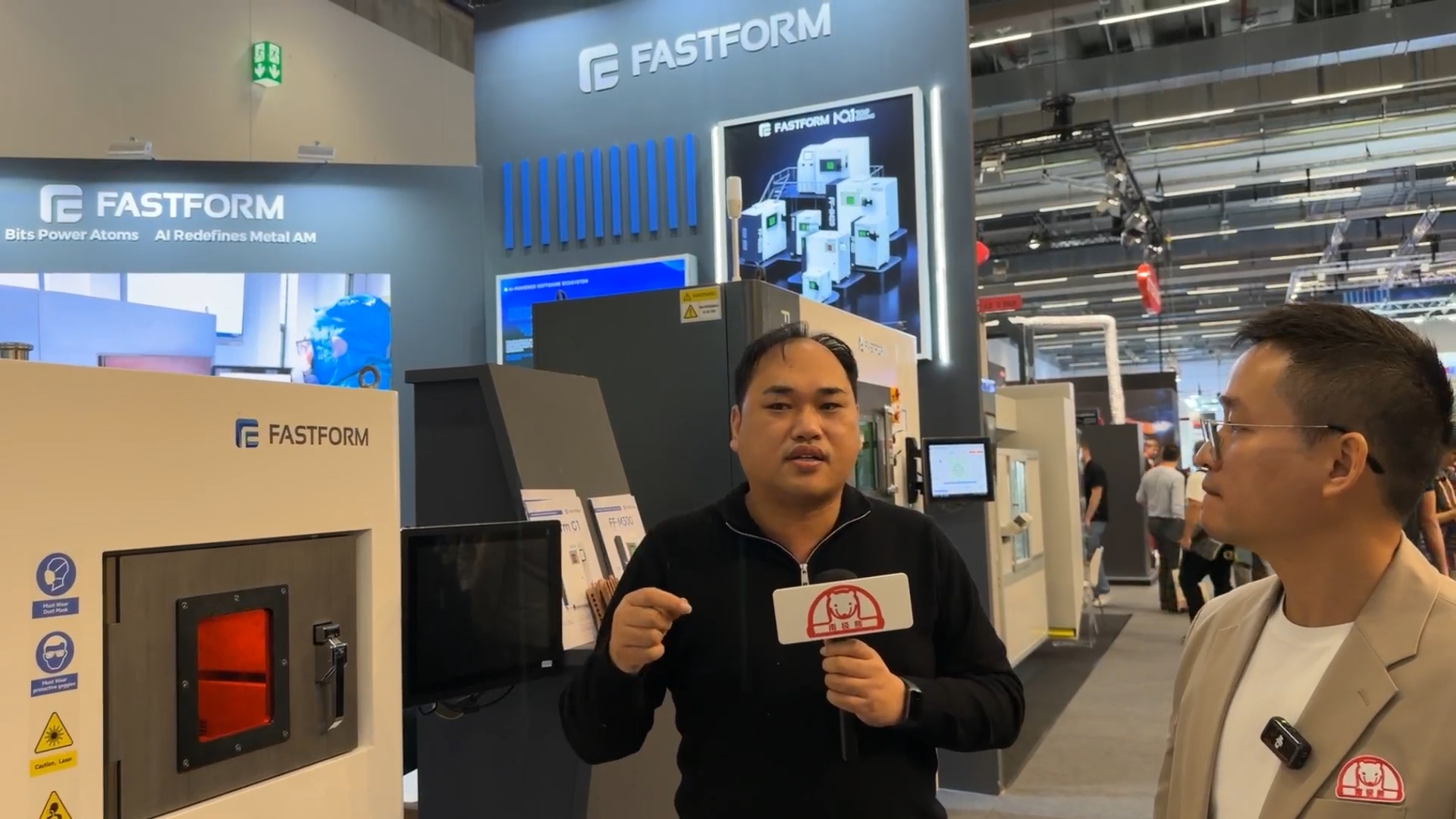
On November 18, 2026, Nanjixiong interviewed FastForm founder Li Shuai at Formnext. Founded by PhDs with backgrounds at Huazhong University of Science and Technology and Nanyang Technological University, the company has expanded from dentistry into tooling, AI cooling and humanoid parts. Li expects approximately 1,500 shipments this year.
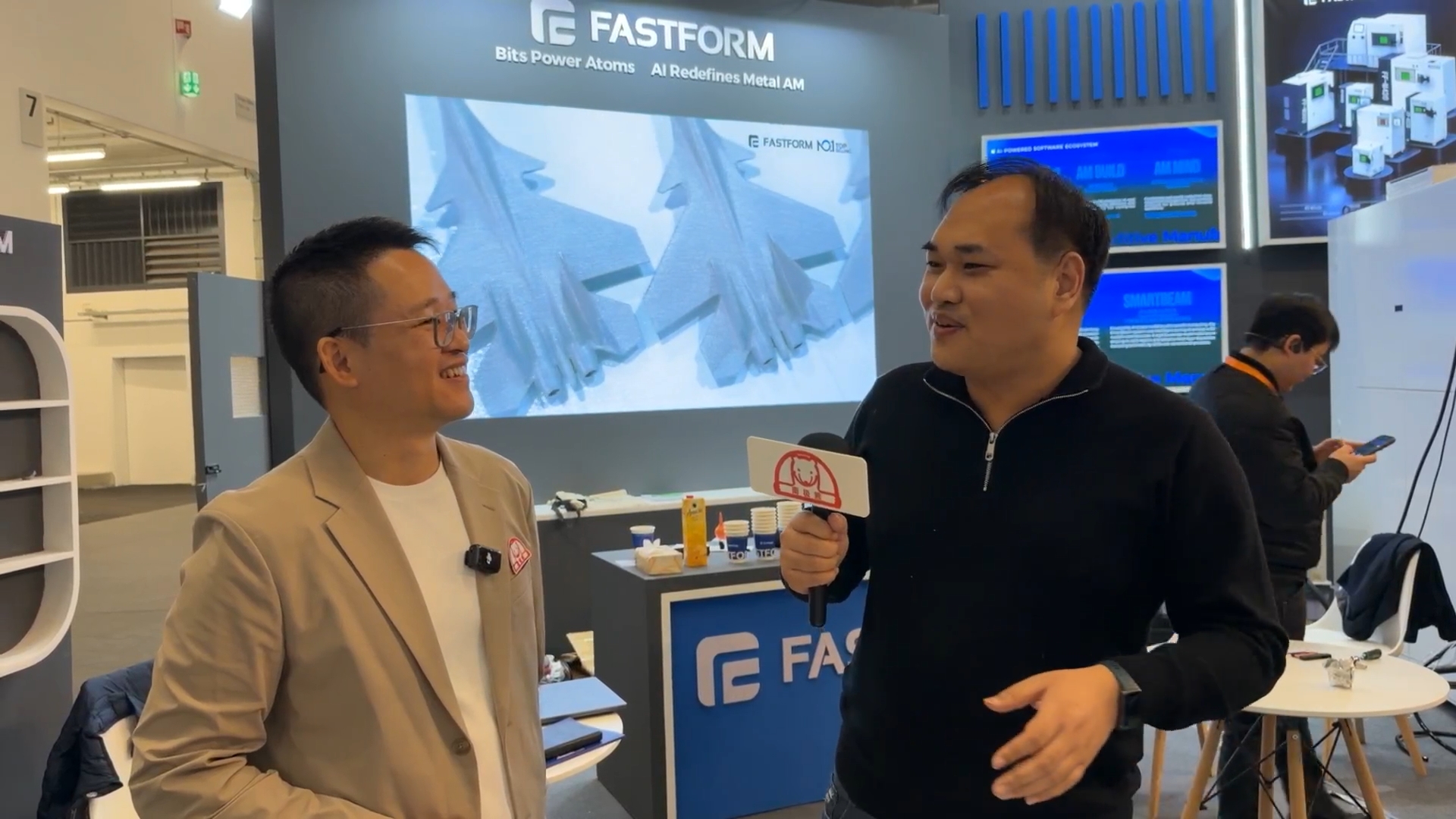
From dentistry to cooling and robotics
Li earned his bachelor's, master's and doctorate at HUST and undertook joint training at NTU. His mentor was Professor Shi Yusheng. He began metal printing in 2011, fifteen years ago.
He describes growth as the result of long preparation. China's market began with universities and institutes, moved into defense, and then expanded into industrial production. FastForm followed that path from dental work into industrial parts, cooling and humanoids, gradually developing its software and hardware.
From price competition to technology
Li accepts FastForm's reputation as an aggressive price competitor, saying lower prices are part of industrialization. The company now emphasizes AI process control to reduce supports, improve forming and lower the skill barrier as production scales.
One customer bought over one hundred machines in slightly more than a year and still has full order books. Li attributes adoption to rising conventional manufacturing and labor costs alongside declining printing costs. After pricing improves, users seek better applications, intelligence and usability. Ten machines once defined a large customer, he said, whereas purchases now commonly involve three or five at a time.
Factory-level delivery
Li expects approximately 1,500 metal machines this year. Seven or eight years ago all Chinese manufacturers combined shipped fewer than 1,000 annually, he said.
FastForm designs factory-level solutions for customers installing dozens or hundreds of machines. Some considered foundries or conventional factories before choosing flexible additive production. Li sees that scale as essential to maturity and better equipment.
M300 evolves from one laser to four
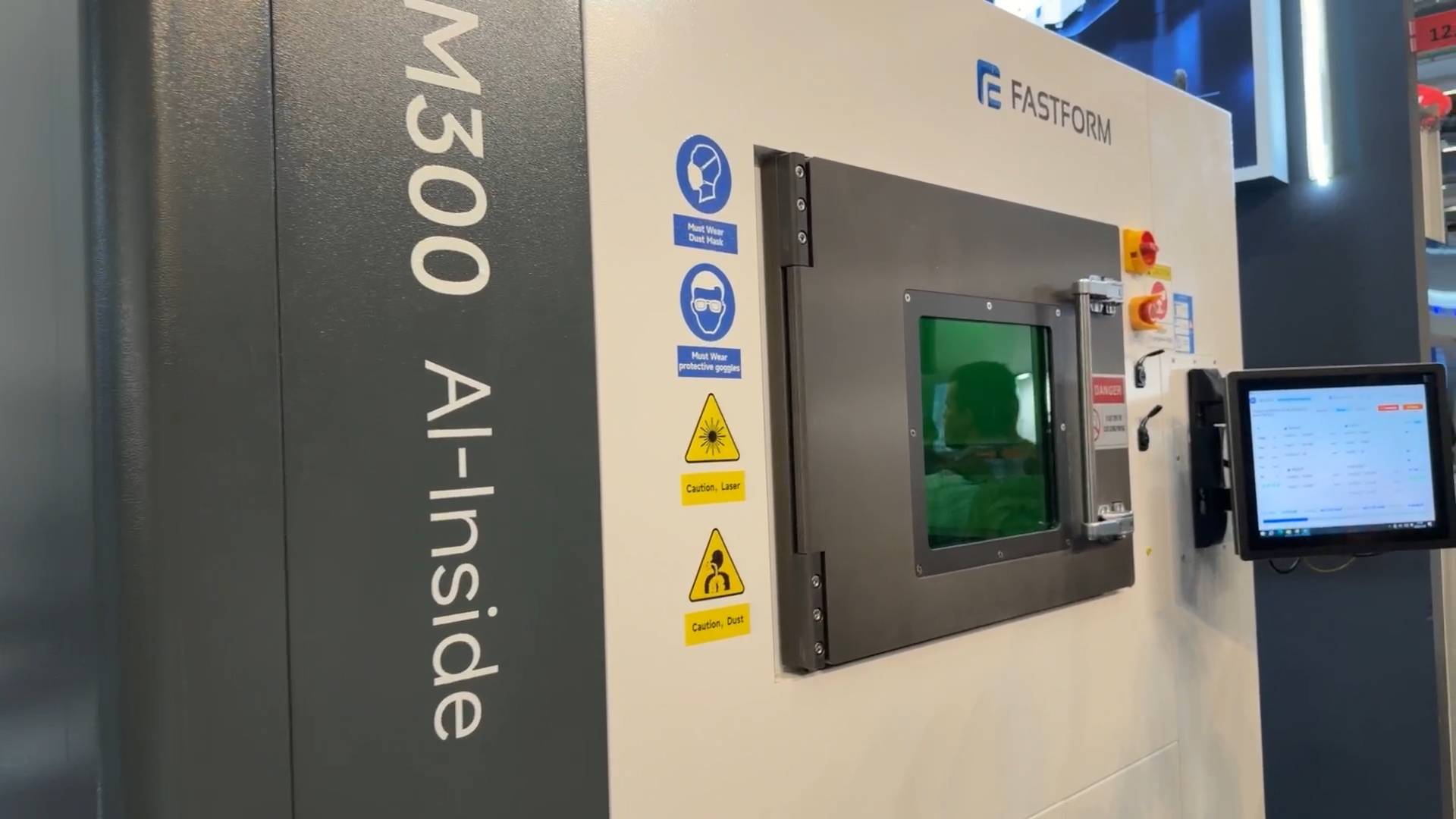
The booth's four-laser M300 carried “AI inside” branding. Li described progression from one laser to two and then four as customers requested more throughput within less than two years.
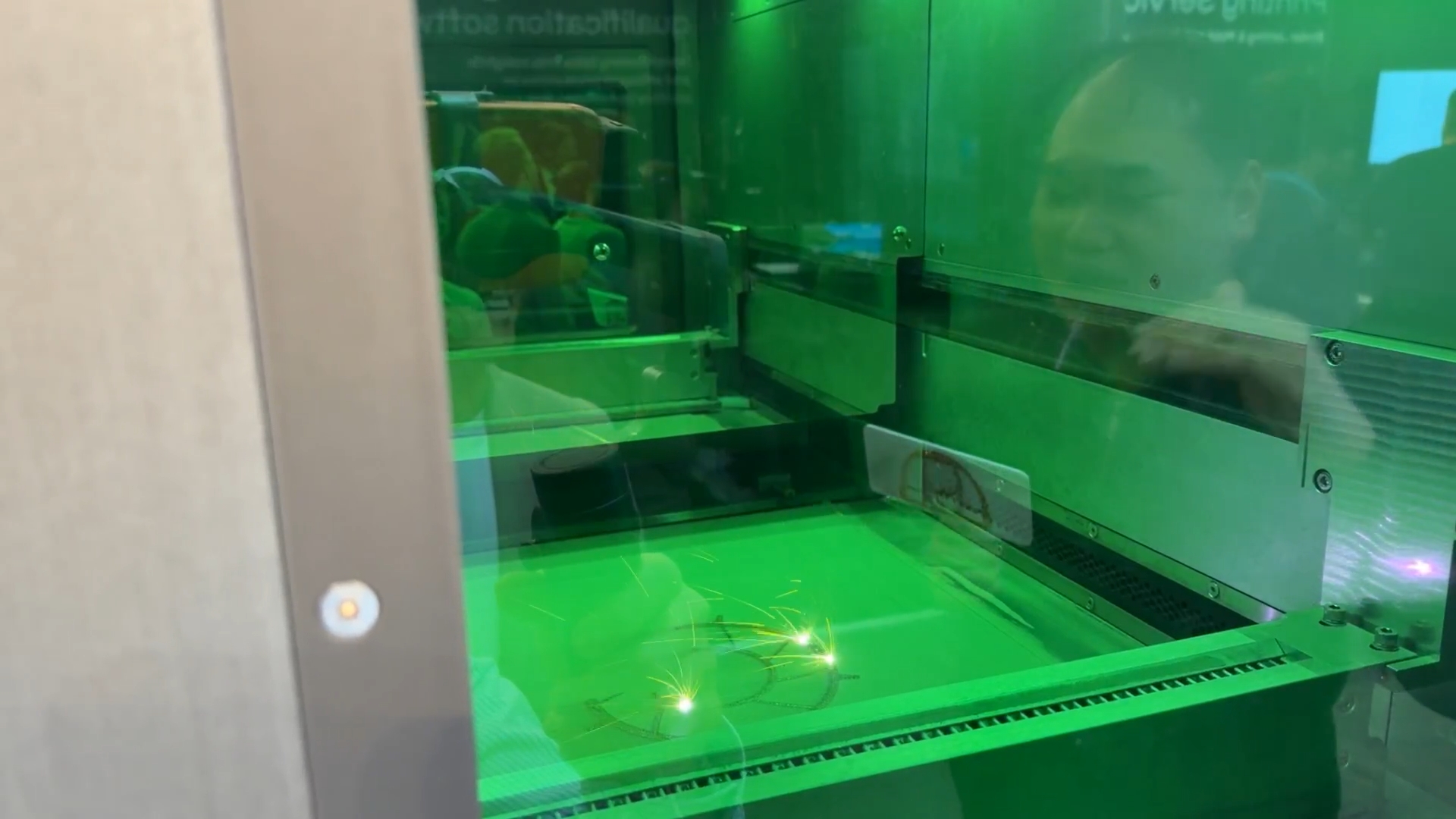
The system works alone or in lines, for example ten machines sharing powder extraction, sieving and return.
Published specifications include 300 × 300 × 400 mm, 100 cm³/h throughput, LFPT bidirectional recoating with approximately 50% better efficiency than conventional recoating, and 30–100 μm layers. Materials include stainless and tool steels, aluminum, pure titanium, TC4, cobalt-chromium and superalloys. The FF-M300 family offers dual and quad lasers, with the quad version highlighted for production.
The 300 and 420 models share an architecture and nearly identical hardware to reduce cost and limit model proliferation. Li said a machine must sell more than fifty units before it can credibly be called a production model.
AiForm-G1 green laser for pure copper
The G1 uses a 500 W single-mode green fiber laser at 532 nm for copper and reflective metals. Li explained that frequency doubling of 1,064 nm infrared light halves wavelength, increasing copper absorption. Material modification provides another route.
FastForm AiForm-G1 product image.
Specifications include 140 × 140 × 180 mm, 15–40 μm spot, 0.10 mm minimum wall, scanning up to 7 m/s and 20–80 μm layers, with AI liquid-cooling support and a dedicated process library.
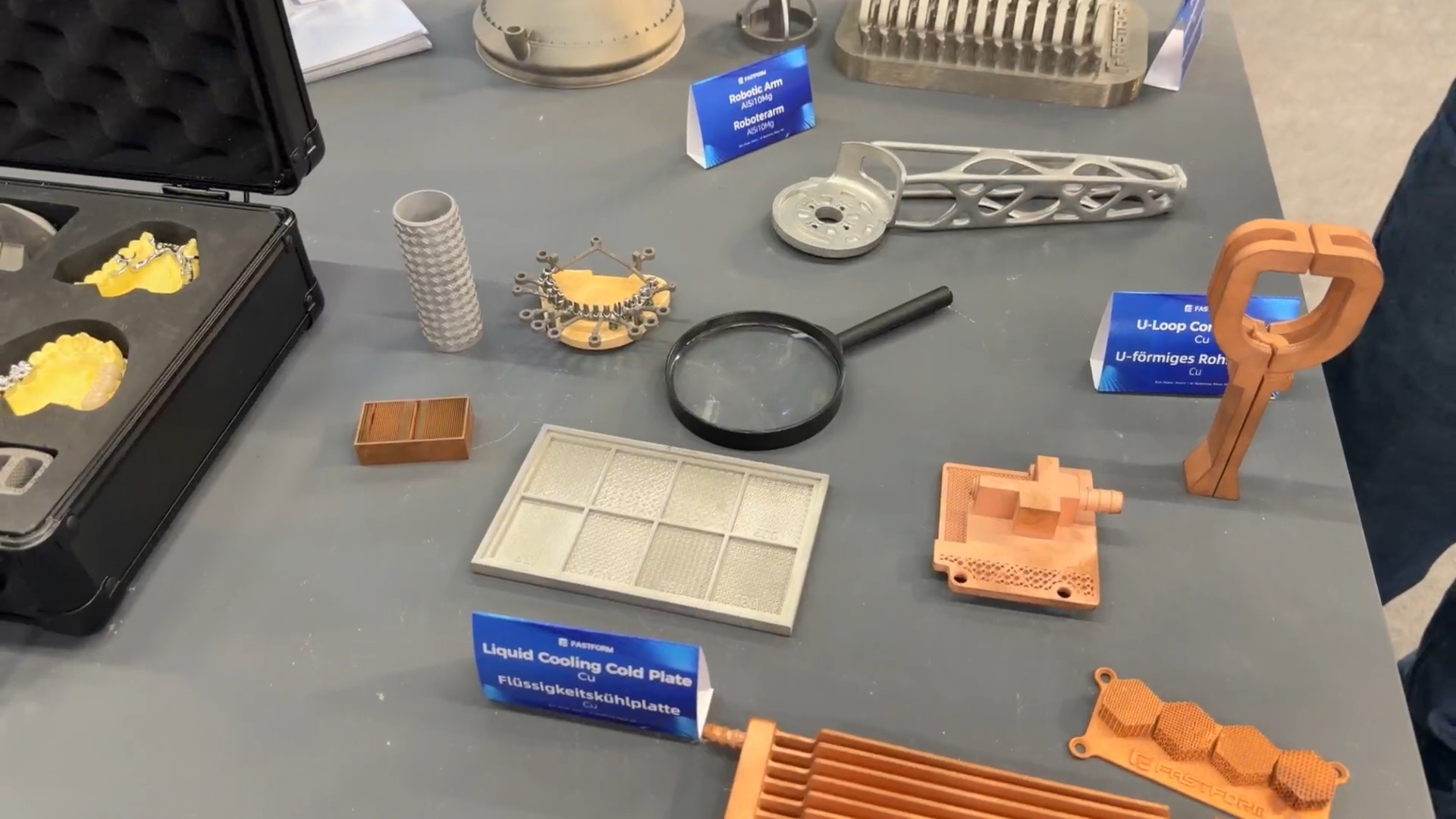
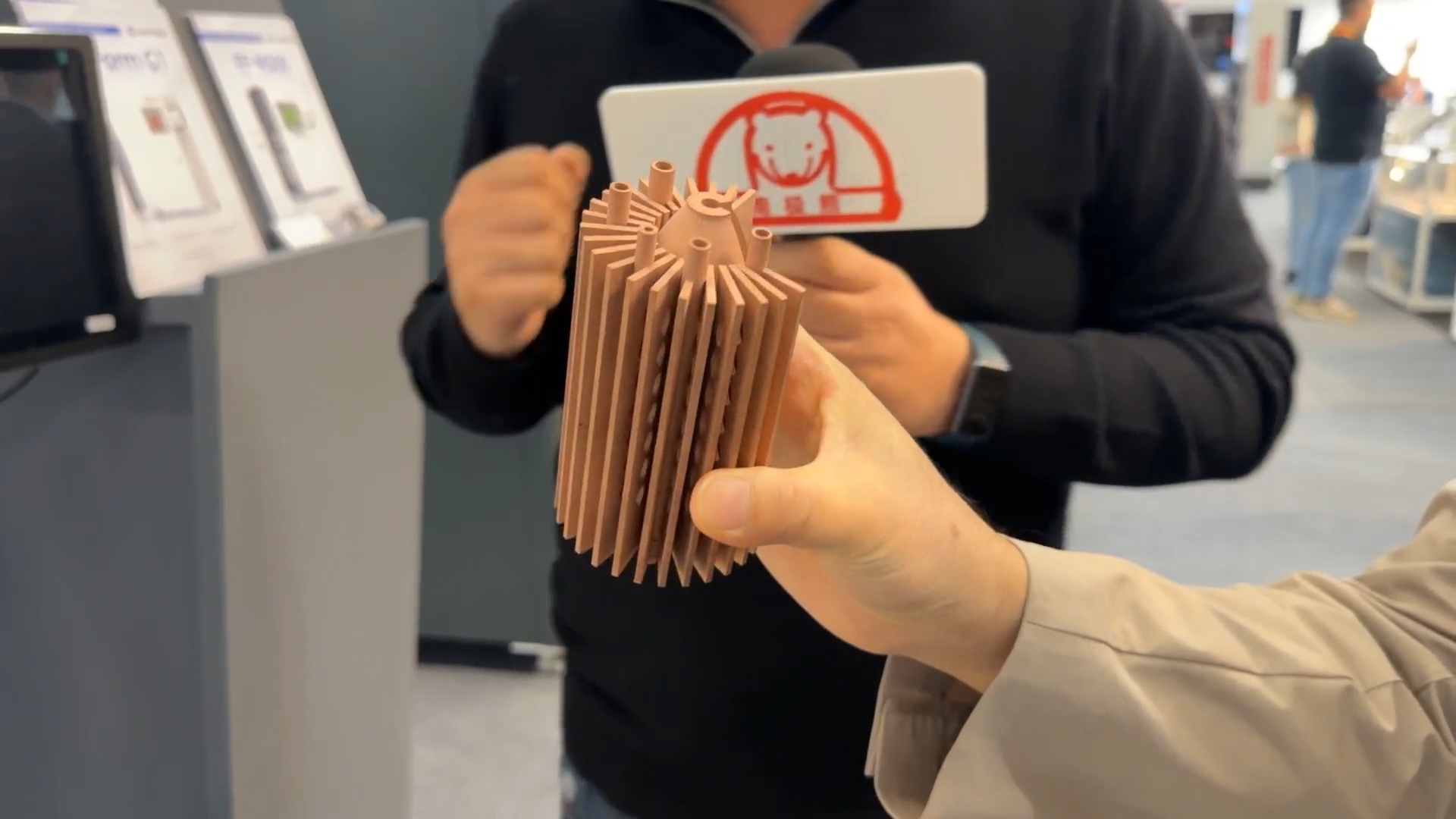
Samples included a DDR5 cold plate with integrated internal flow channels and topology-optimized humanoid components. Li said sub-0.1 mm channels and fine structures are difficult with other processes. Applications include AI cooling, cold plates and optical modules.
Capturing expertise in reusable AI models
Growing demand exceeds the available number of process engineers. FastForm aims to preserve experience in reusable models. Li said its in-house large software model for print and process analysis was nearing registration and could then serve the wider industry.
He compared this with AI-assisted five-axis CNC programming, which reduces a once-specialist barrier. Widespread adoption requires equipment and usable workflows together.
Nanjixiong's observations
Li recalled Shi Yusheng's concept of broadly distributed manufacturing: a machine can make humanoid parts one day and molds the next. AI could connect an image, a prototype and a printed component. He also referenced the Gartner cycle from early promise through a bubble and correction to sustained adoption.
FastForm's growth combines machines, software and factory delivery. Whether shipments keep increasing will depend on orders from cooling, humanoids and other applications.
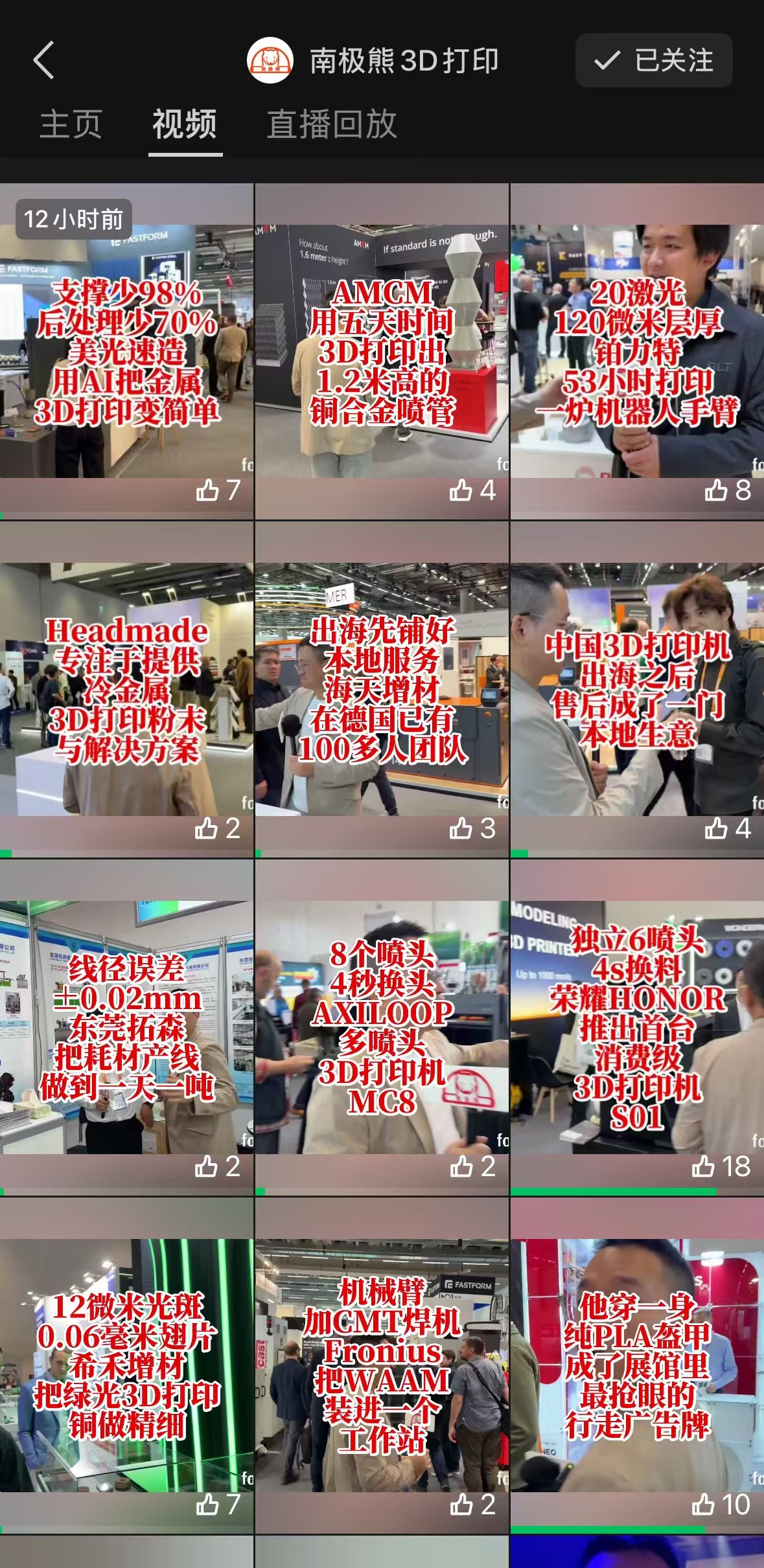
Formnext interviews are being released on Nanjixiong's video channel.

AI-translated from an article by Beijixiong on Nanjixiong, originally published on 2026-11-21. Text and images retain the original source attribution.
Read the original Chinese article |


 Record number | ©2024 panda3dp Team. Powered by panda3dp