Formnext 2026 opened in Frankfurt on November 17. Shenzhen Esun Industrial, whose brand is eSUN, exhibited at Hall 12.1, F01, showing flexible materials, specialty engineering materials and new consumer products. These offerings illustrate the move toward distributed end-use manufacturing and a broader role for materials companies in organizing production. Nanjixiong interviewed founder Yang Yihu about this trend.
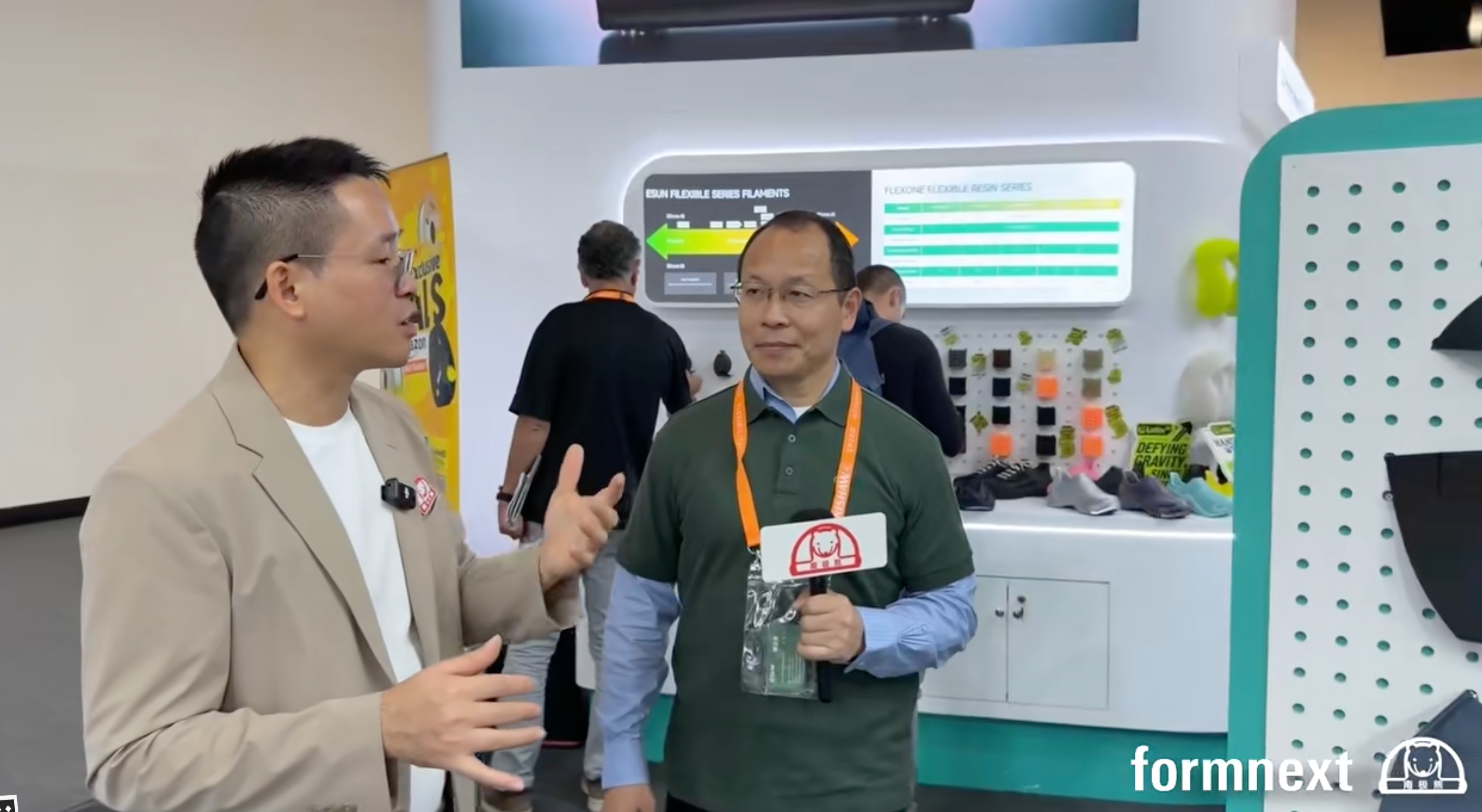
Distributed manufacturing from toys to shoes
Toys have already begun to change how they are produced. Customer cases include businesses deploying thousands of printers across households and small factories and generating substantial annual output. Without moldmaking, they can iterate rapidly and personalize production across a distributed network.
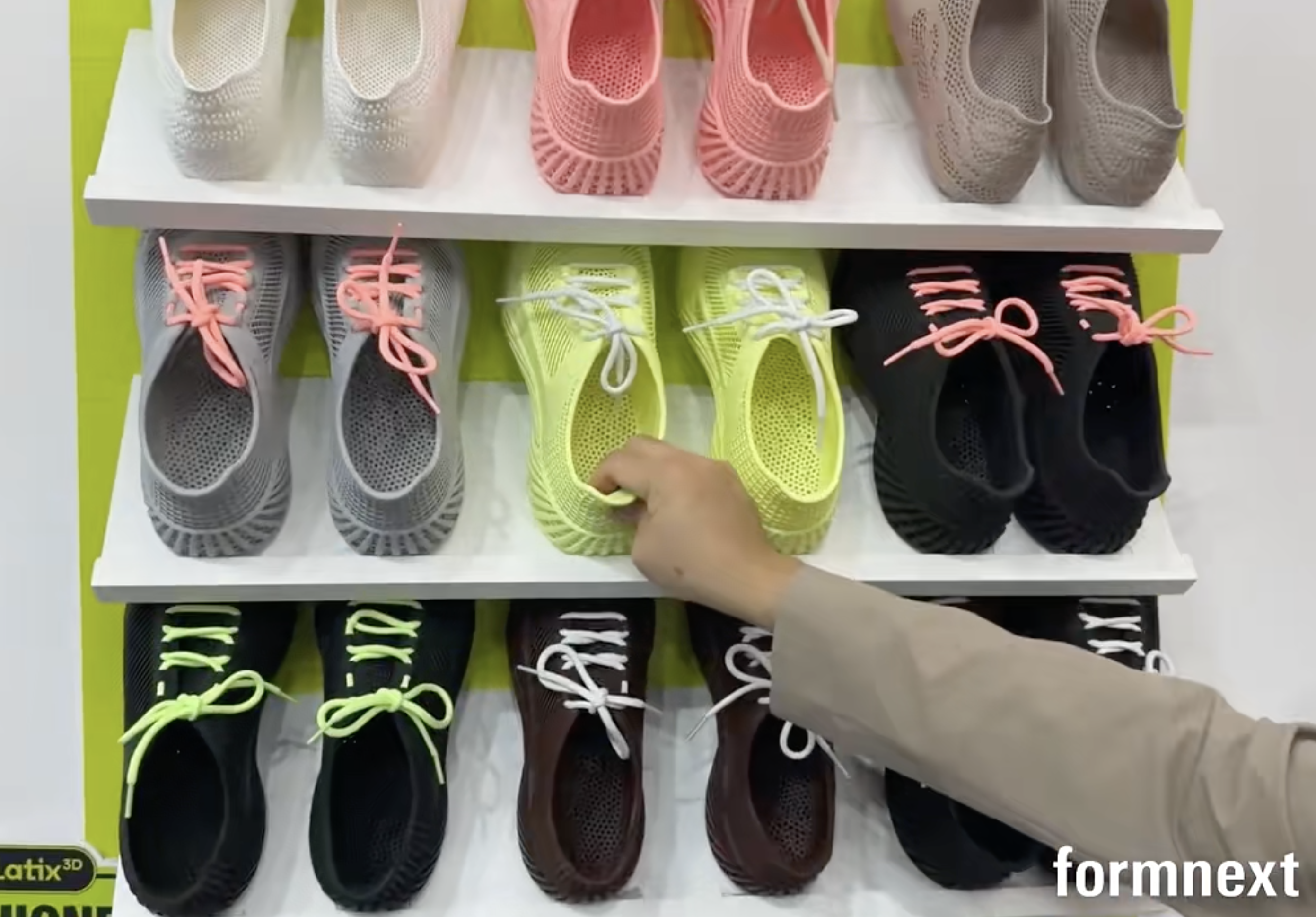
eSUN sees similar product and development requirements in footwear. As flexible materials meet performance requirements, footwear could move into a global network of local, on-demand manufacturers. Distributed customization platforms such as latix offer a route to rapid personalized production.
Flexible materials for footwear production
Materials must withstand daily wear. eSUN highlighted its FlexOne single-component elastomer resin family.
FlexOne can be used immediately without precise mixing ratios or a limited pot life, and works with a broad range of printers, supporting distributed production.
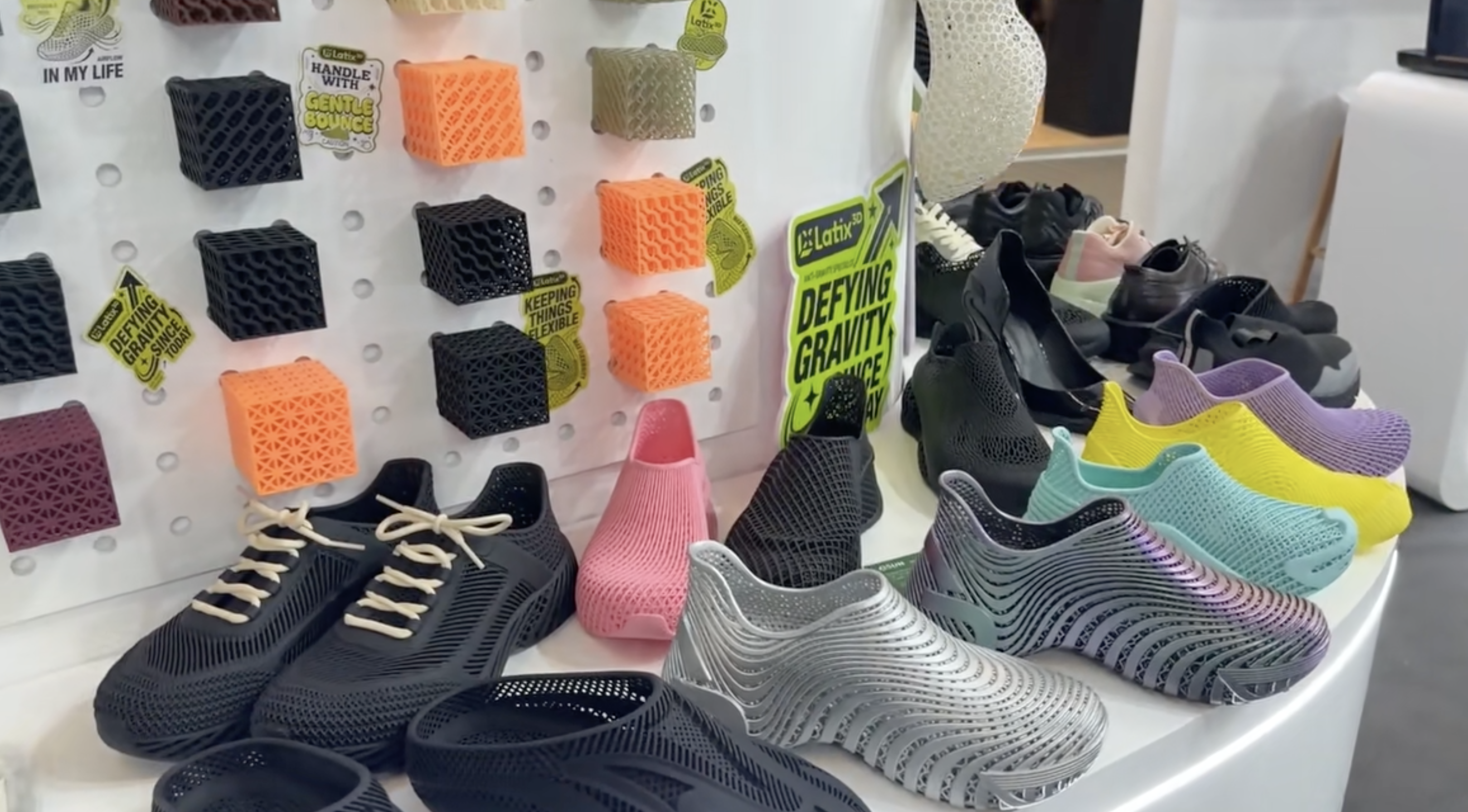
eSUN's single-component elastomer resin is paired with UnionTech's lower-cost equipment to provide a materials-and-machine workflow. This moves flexible footwear beyond isolated prototypes toward reproducible production. Examples combined printed elastomer soles with traditional leather uppers to balance cushioning and comfort.
Engineering materials for embodied robots
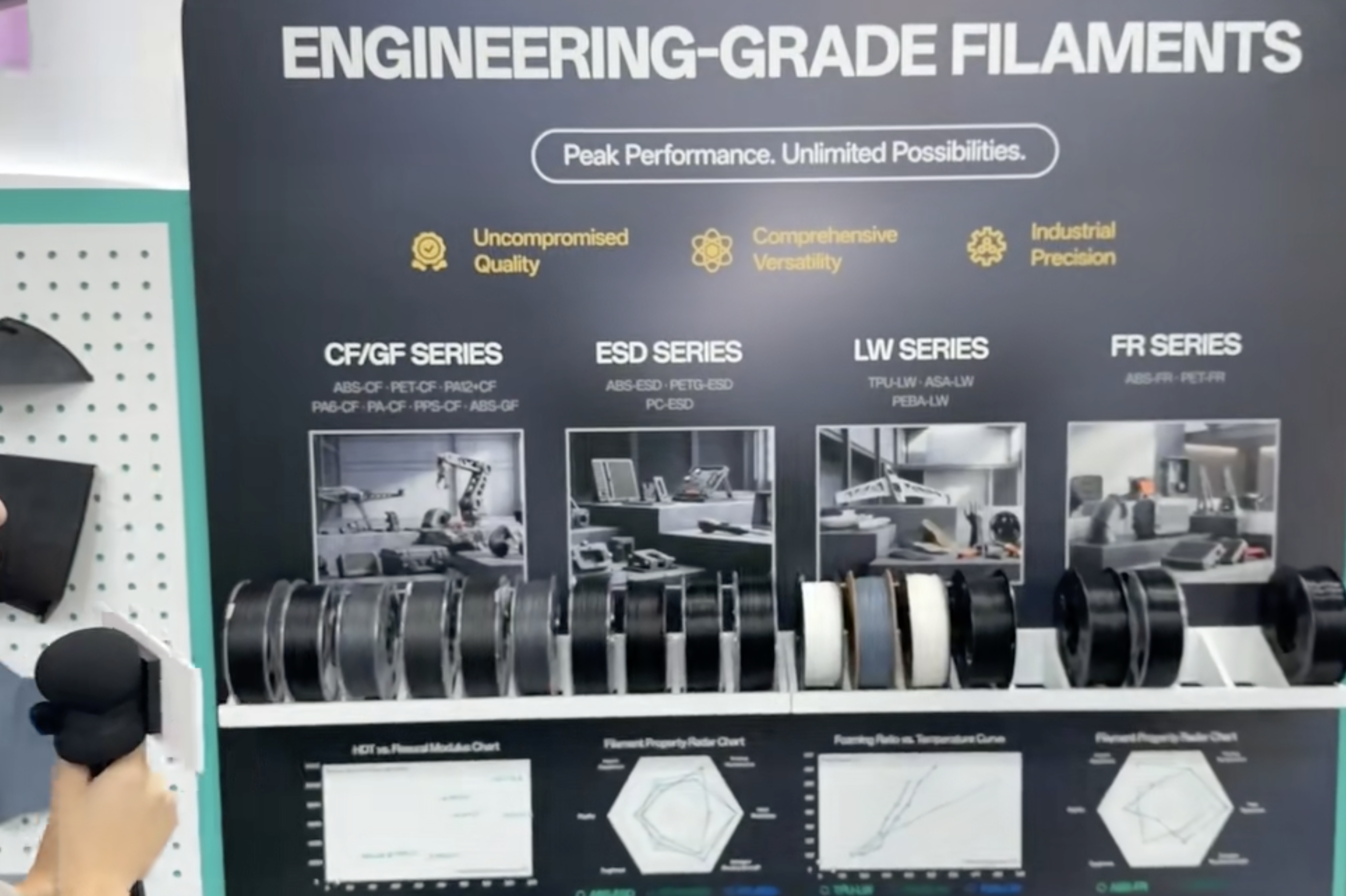
The portfolio includes carbon-fiber-reinforced, antistatic, flame-retardant and lightweight materials based on ABS, TPU, PET and nylon.
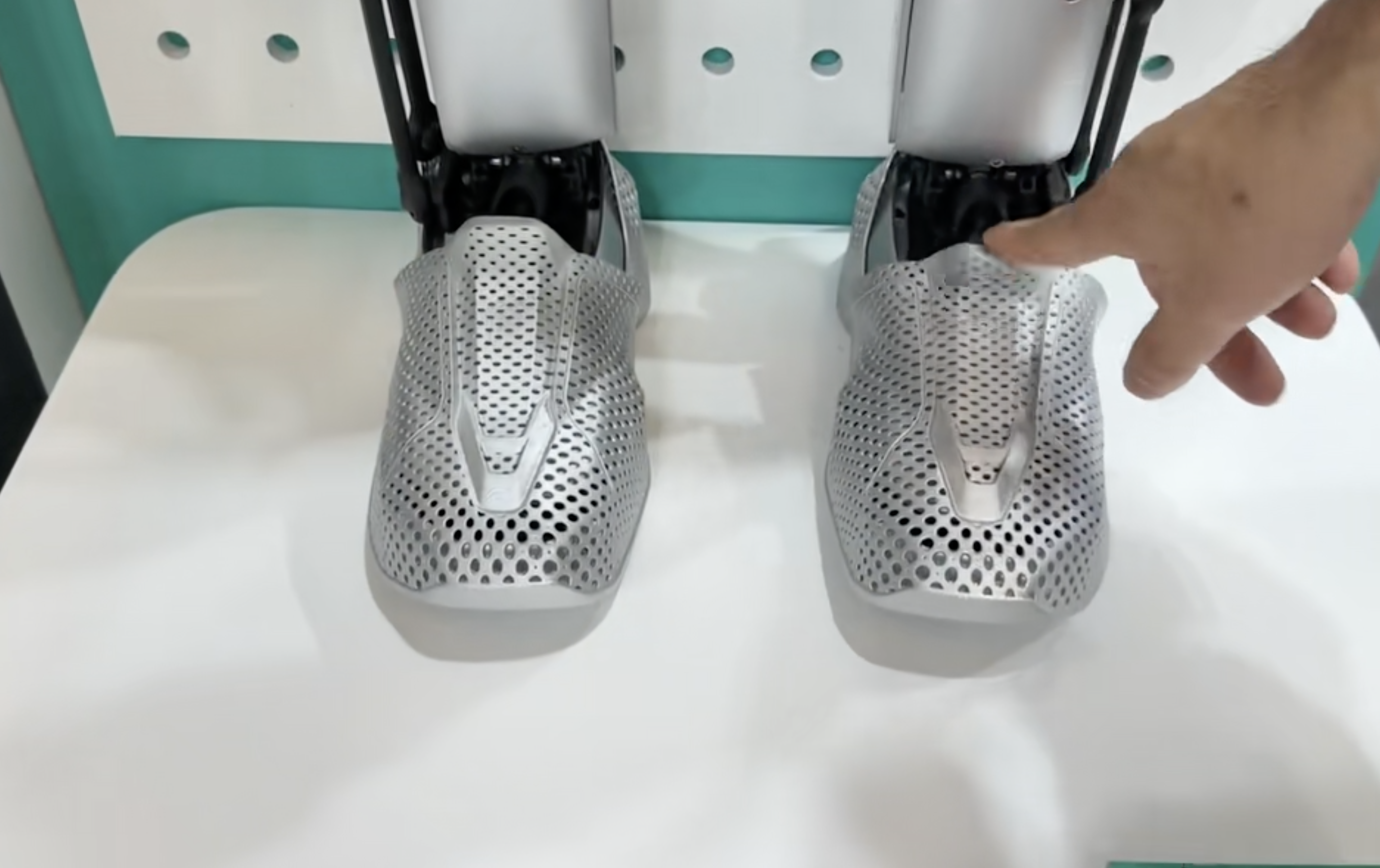
A humanoid robot sample showed the use of different materials in different areas. Flexible joint areas used a single-component elastomer, the shell PLA or ABS, load-bearing joint parts PA6-CF or PPS-CF, and foot-worn items flexible resin. This combination of flexible and rigid materials is already finding practical use in robot development.
Consumer materials for print farms and studios
• PETG 2.0 prints directly without predrying. Official tests report performance close to its first day after fifteen days open, with precision approaching PLA. This reduces drying time and equipment requirements.
• PLA-Coffee combines recovered coffee grounds with biobased PLA through dehydration, grinding and modification. It addresses fiber-related moisture uptake and clogging while retaining a matte coffee texture and aroma during printing.
• rPETG uses chemical recycling and contains more than 50% recycled material.
• Ultra-high-speed PLA supports speeds up to 1,000 mm/s for productivity-focused print farms.
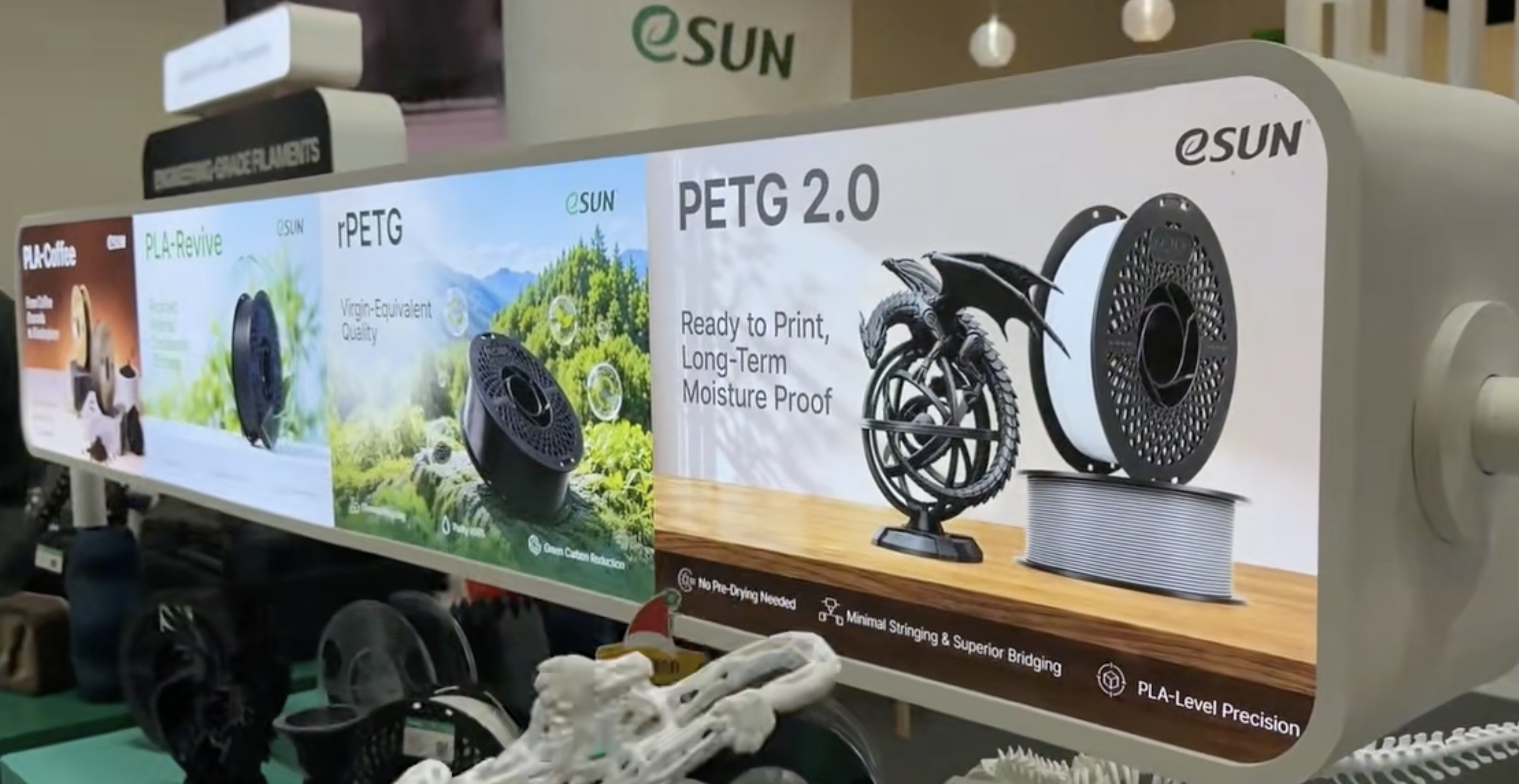
Transparent, matte and silk materials were also on display, along with PLA interpretations of Van Gogh's The Starry Night.
Nanjixiong's observations
Founded in 2002, Esun Industrial was among the world's first companies to commercialize PLA printing filament in 2007. eSUN has built on nearly two decades of materials R&D and modification.
The booth showed footwear resin capable of more than one million flex cycles, engineering materials matched to robot parts and PETG designed to remove drying from print-farm workflows. These materials are being developed around specific uses.
As printing becomes distributed, materials suppliers can help build local production networks. Time will show whether eSUN's portfolio can sustain distributed footwear production, but its direction is clear.
AI-translated from an article by Xiaoruanxiong on Nanjixiong, originally published on 2026-11-18. Text and images retain the original source attribution.
Read the original Chinese article |


 Record number | ©2024 panda3dp Team. Powered by panda3dp