Nanjixiong introduction: While many still question whether FDM 3D-printed shoes are wearable, Nike has already introduced several FDM-printed shoes priced at over a thousand yuan per pair.
When will ordinary consumer 3D printer users be able to print shoes to wear themselves?
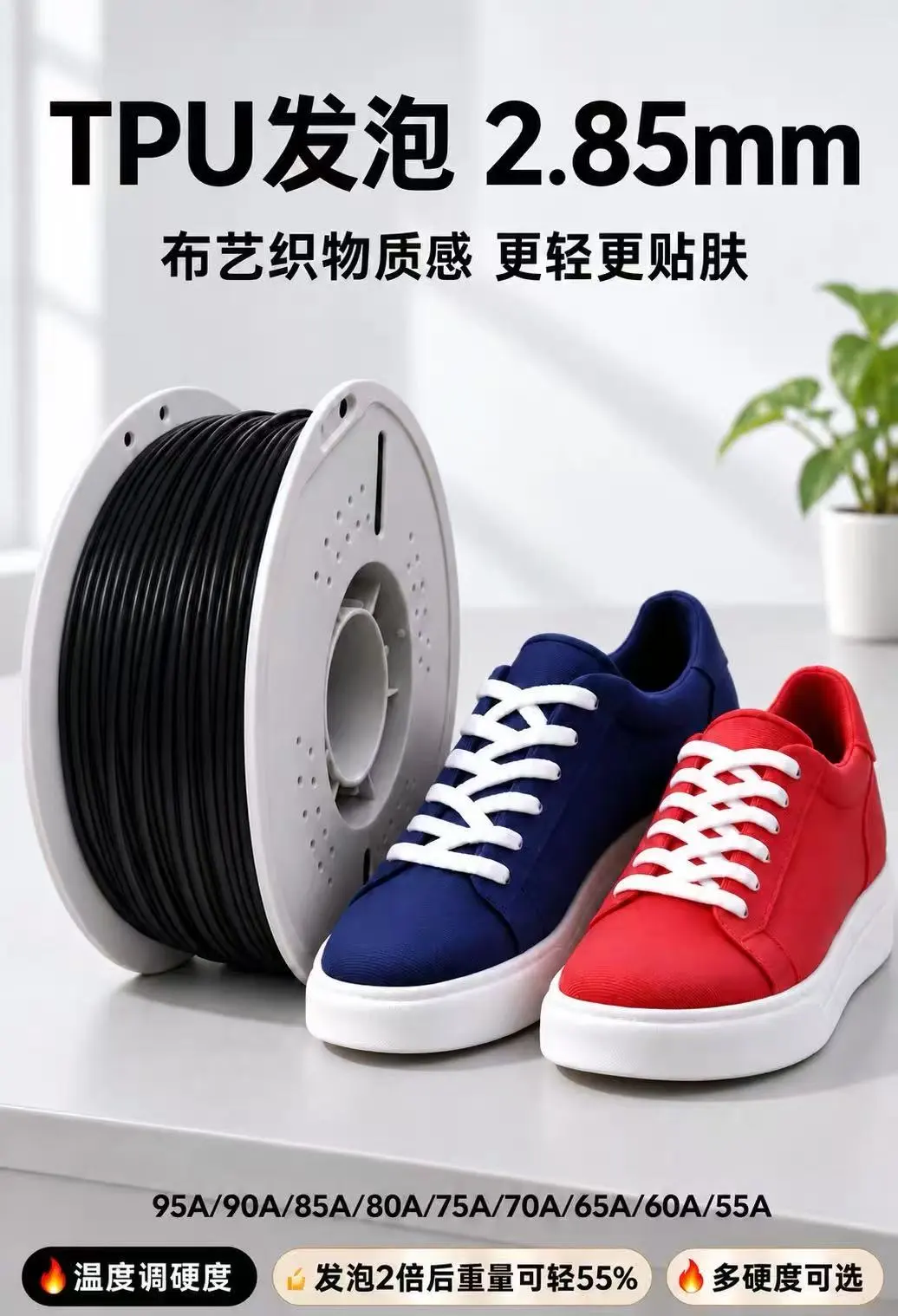
In early October 2026, Nanjixiong noticed manufacturer lanxiaodu promoting 2.85 mm foaming TPU filament. This may appear to be merely a change in consumable specification. The technical data, however, send a clear signal: 2.85 mm is returning because soft materials can finally be fed reliably, rather than simply for greater speed. For FDM shoes to become everyday footwear, soft-material printability is more fundamental than speed.
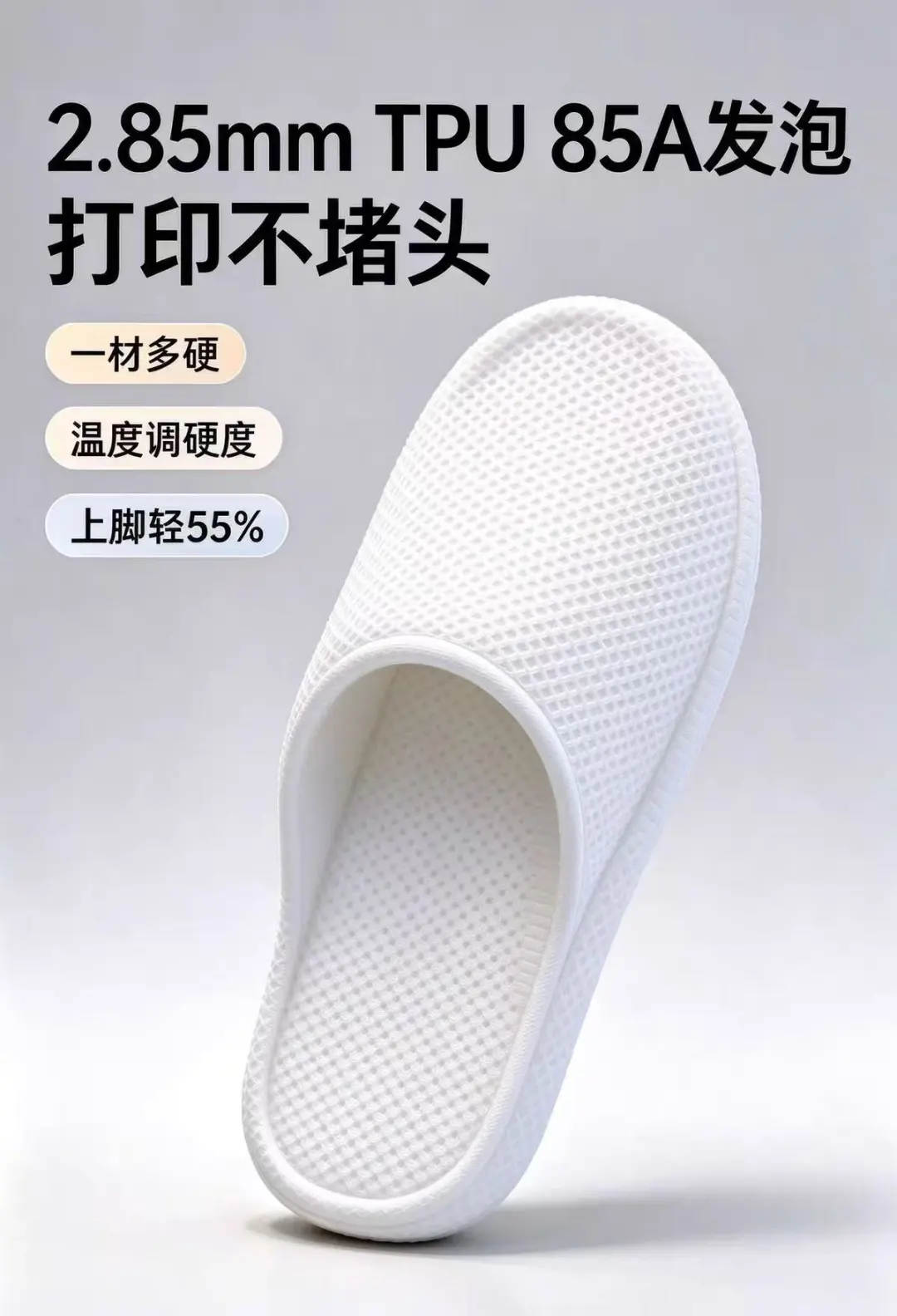
Moving Beyond Mid-Print Jams: Soft-Material Physics Determines Filament Diameter
For the past decade, desktop FDM has been dominated by 1.75 mm filament, well suited to rigid PLA and ABS. Shoes, however, require soft TPU, or even foaming TPU.
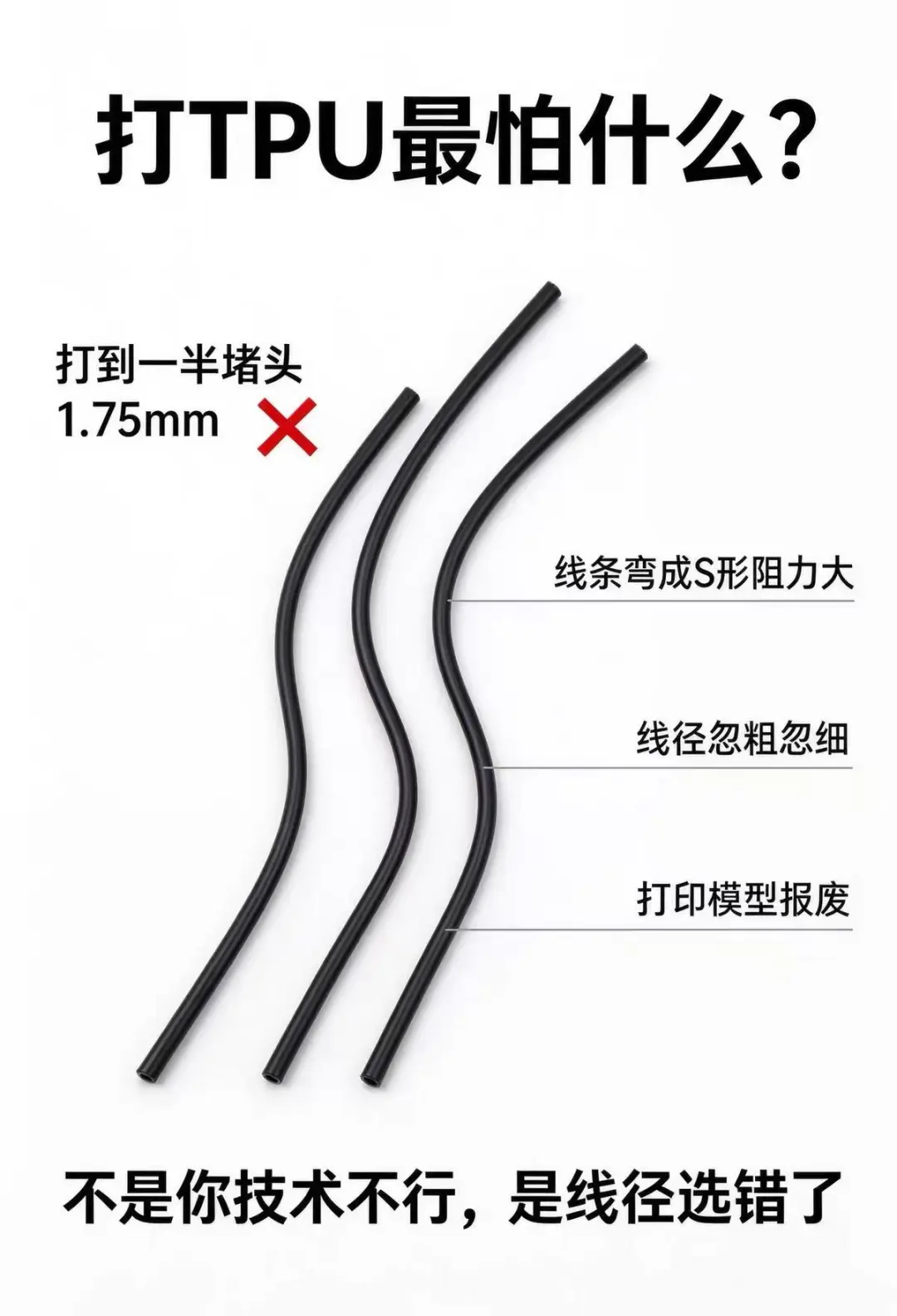
A blunt but relevant observation is that the problem may be the filament diameter rather than the user's skill. Thin 1.75 mm filament can bend into an S shape like a noodle inside the feed tube, creating substantial resistance. Soft material can also stretch and become thinner, causing fluctuating diameter and ultimately a failed print.
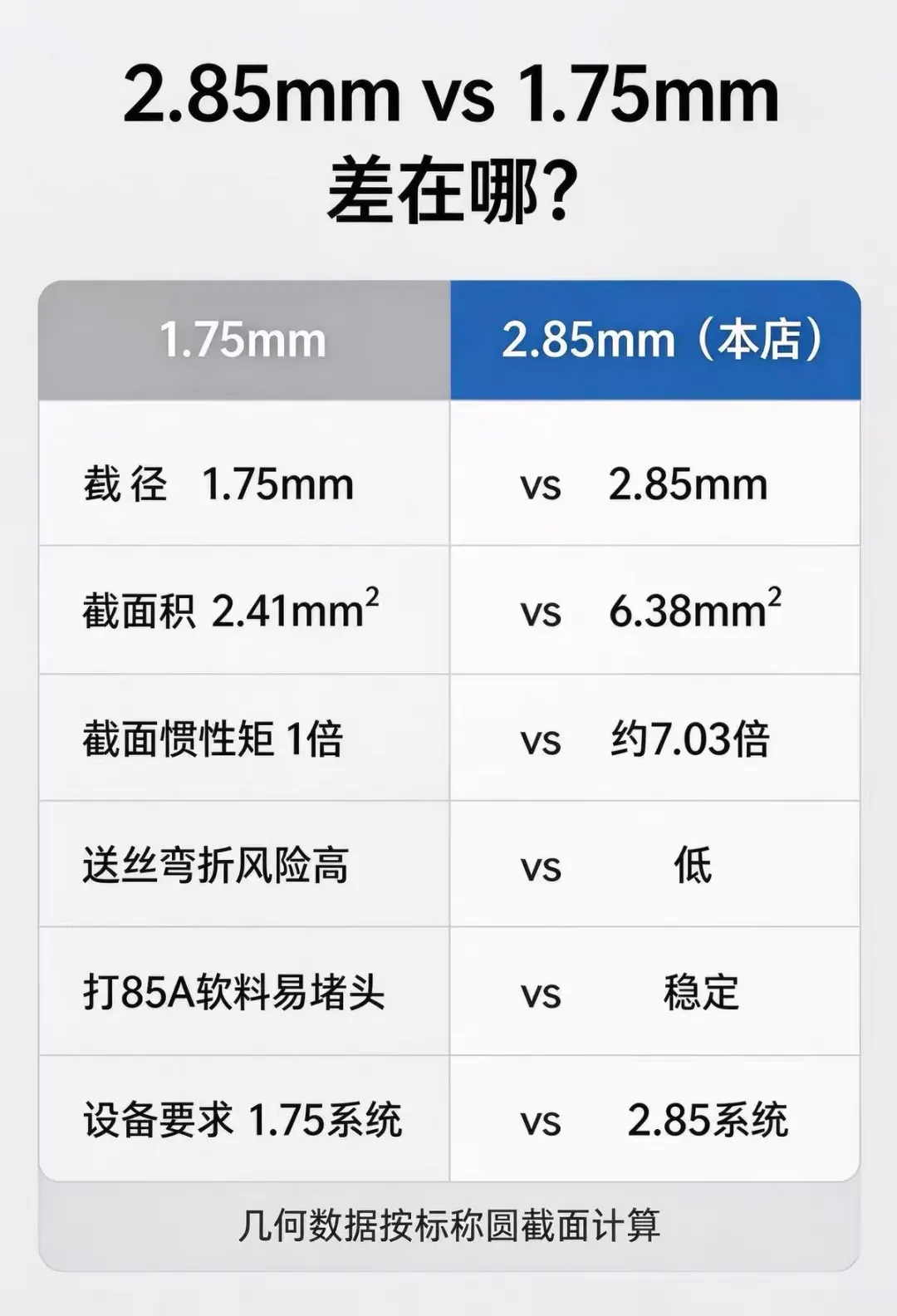
A 2.85 mm filament has a cross-sectional area of 6.38 mm², 2.65 times the 2.41 mm² of 1.75 mm filament. More importantly, its second moment of area, associated with bending stiffness, is approximately seven times greater. For the same material, this means much higher bending stiffness and straighter, steadier feeding. Soft material pushed through a 2.85 mm path is less likely to buckle. The greatest concern in flexible FDM printing is unstable rather than slow extrusion. The 2.85 mm format addresses stability, allowing material as soft as 85A to feed consistently without clogging. In Nanjixiong's view, unreliable soft-material printing has held FDM shoes back, and 2.85 mm opens the path forward.
Foaming TPU Brings Lightness and Resilience Within Filament FDM's Reach
The lanxuaodu material shown is not merely soft; foaming is central. The property table indicates that after foaming at 270°C, density falls from 1.185 g/cm³ to 0.528 g/cm³, reducing weight by approximately 55%.
For FDM shoes, this addresses the longstanding complaint that printed soles are heavy and hard, with a feel far from genuine foamed outsoles. Foaming TPU brings lightness and resilience, advantages previously associated with photopolymerization and pellet extrusion, into the reach of filament FDM.
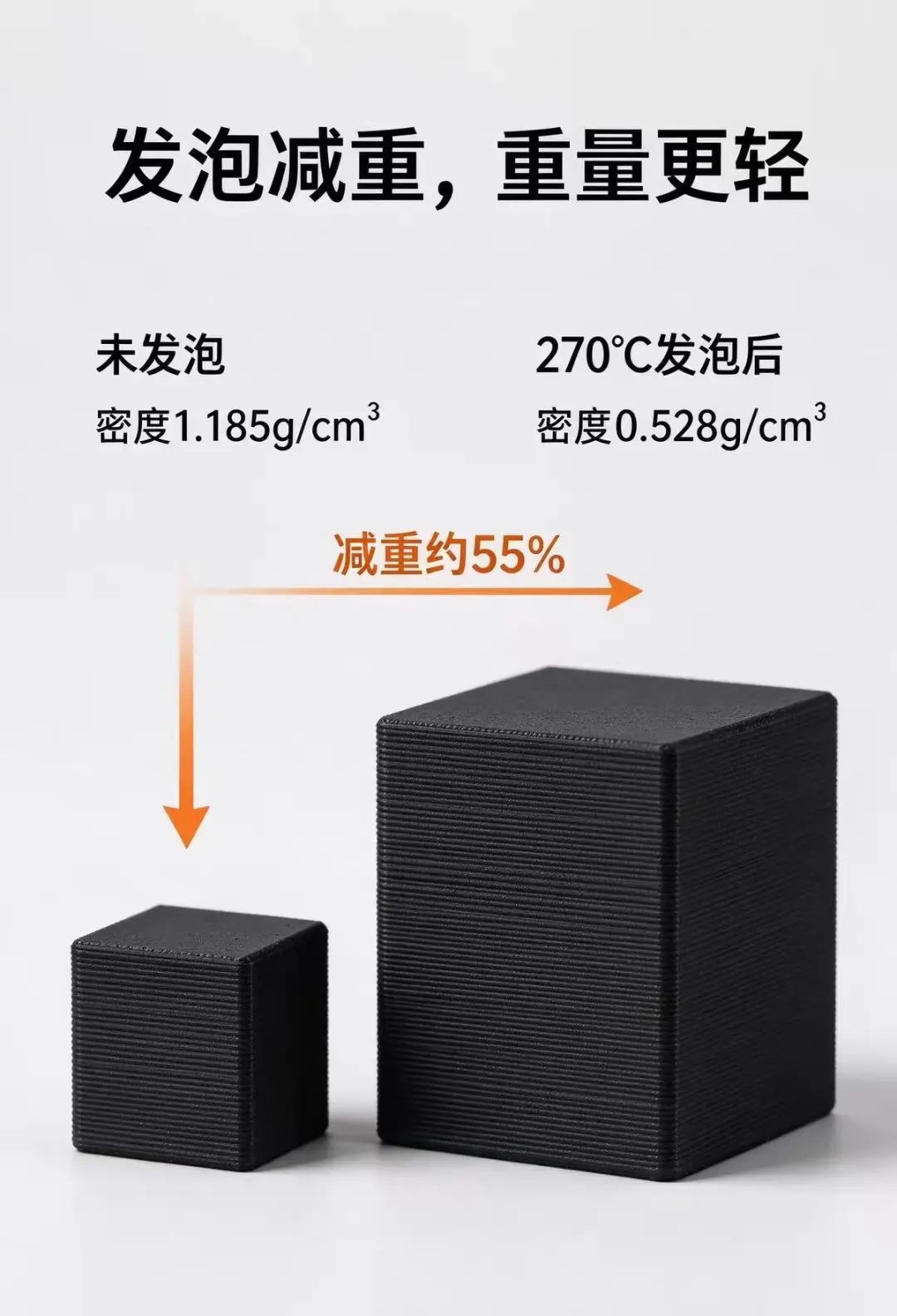
Another interesting feature is adjusting hardness through temperature using one material. According to the table, increasing temperature from 240°C to 270°C changes Shore hardness from 85.5A to 68.5A. By controlling temperature in the slicer, a shoe's sole and upper, or even different loaded regions of one shoe, can have different hardnesses from the same spool. Combined with approximately twofold foaming, 55% lower weight, and a fabric-like texture more comfortable against skin, FDM shoes move from hardcore hobbyist toys toward everyday consumer products that are light and resilient.
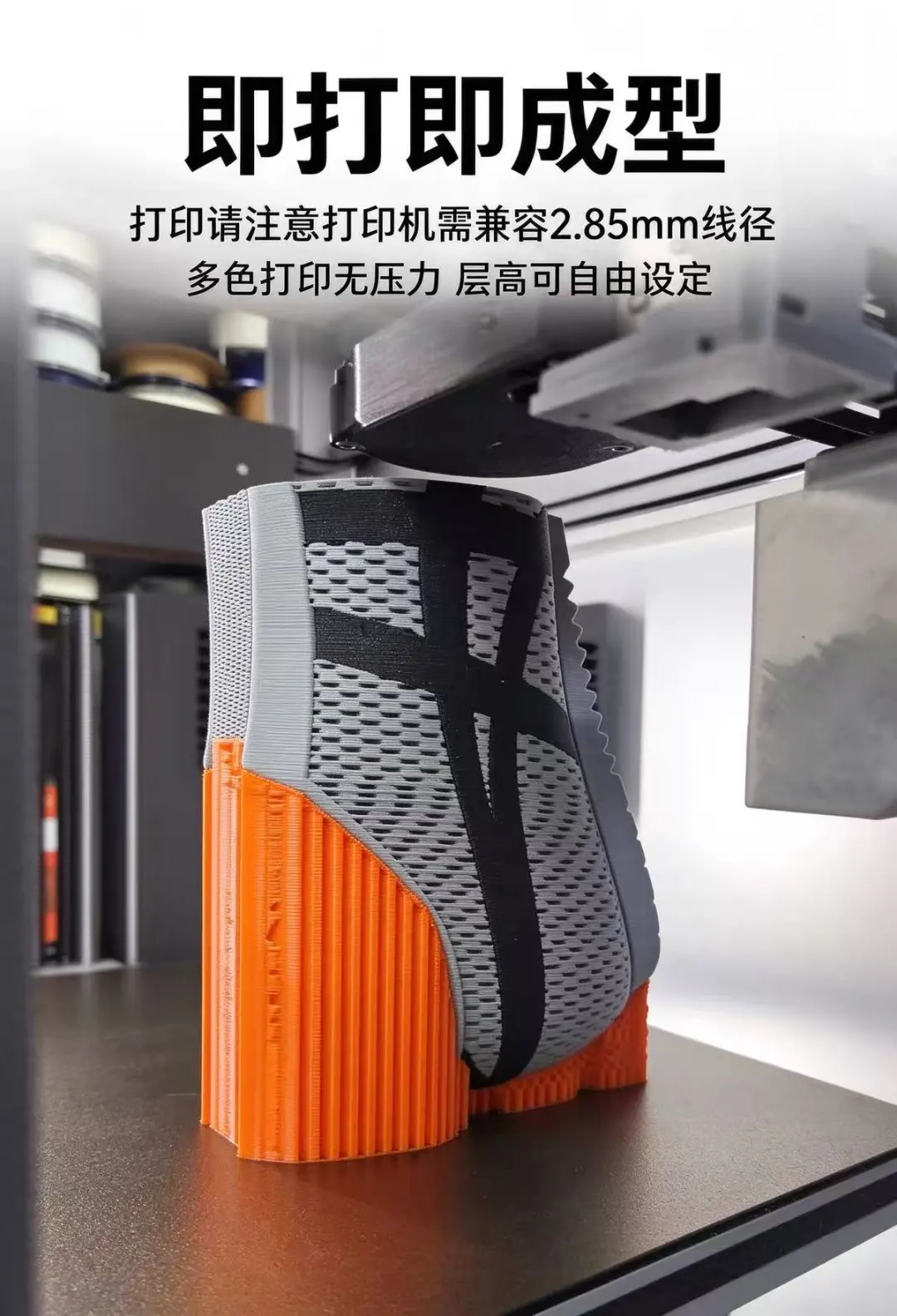
From Trial-and-Error Prints to Direct Formation
Nanjixiong saw lanxiaodu demonstrate multicolor printing, freely adjustable layer heights without pressure, and complete shoe prints. Previously, a minor feeding jam could waste two days of printing. Stable 2.85 mm feeding, multicolor modules, and appropriate temperature-controlled foaming strategies now improve success rates.
Video: Nanjixiong interview with lanxiaodu.
For the first time, printers, slicing, consumables, and the ecosystem are aligning around the 2.85 mm format.
Nanjixiong's Commentary
The breakthrough for FDM shoes will probably begin with a 2.85 mm TPU shoe that is sufficiently light, resilient, and reliable for daily wear, rather than simply reducing printing time from two days to one.
A real breakout is still some distance away. A 2.85 mm system may require users to upgrade or replace extruders. Post-processing consistency and warping control for large shoe bodies still require refinement using broader user data. Nevertheless, its return addresses a foundation overlooked for too long: reliable soft-material printing.
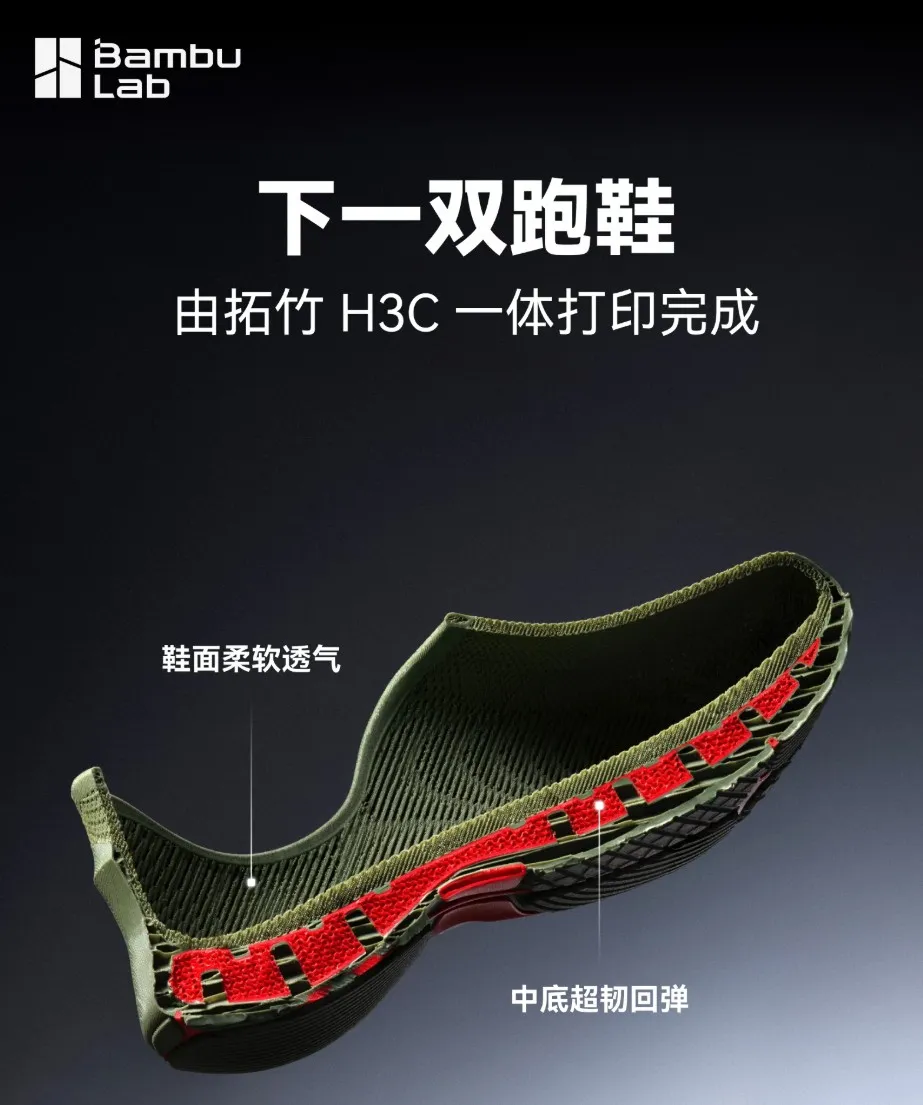
On the evening of October 26, 2026, Bambu Lab announced its latest nine-nozzle printer, the H3C, with support for 2.85 mm materials aimed at printed footwear. Its announcement presented footwear designed to fit the feet more closely, combining softness and resilience through integrated multi-material printing, and stated that the H3C would officially launch at 22:00 on November 3, alongside the new TPU 75A material. It also used the promotional line: “Watch closely—H3C will do this only once.”
Nanjixiong has seen many stories about an imminent breakthrough. What differs here is a technical path toward FDM shoes that people can wear, enjoy wearing, and want to wear, rather than just a faster machine. The breakout will not arrive tomorrow, but the starting gun has fired.
Interested in 2.85 mm TPU? Add lanxiaodu's owner on WeChat: lanxiaoduxiaoya.
AI-translated from an article by Xiaoruanxiong on Nanjixiong, originally published on 2026-10-29. Text and images retain the original source attribution.
Read the original Chinese article |



 Record number | ©2024 panda3dp Team. Powered by panda3dp