On October 14, 2026, TCT Shenzhen officially opened. Nanjixiong looked at several demonstrations at the Meshy AI booth. The company, which has grown rapidly in AI 3D generation over the past two years, brought several new features aimed directly at 3D printing users.

Just launched: Meshy Edit lets users select an area and change it
The first feature demonstrated by staff at the booth was called Meshy Edit, which had launched only a few days earlier. The process is straightforward: after generating a base model with Meshy's Meshy 6 or Meshy 7 AI model, users can select a region with the lasso tool and enter an instruction to make a local edit. The demonstration removed a hat from a character model. Staff selected the hat area; after regeneration, the hat was gone and natural-looking hair appeared in its place. Viewed from the back, the structure looked seamless, while all other parts remained unchanged.
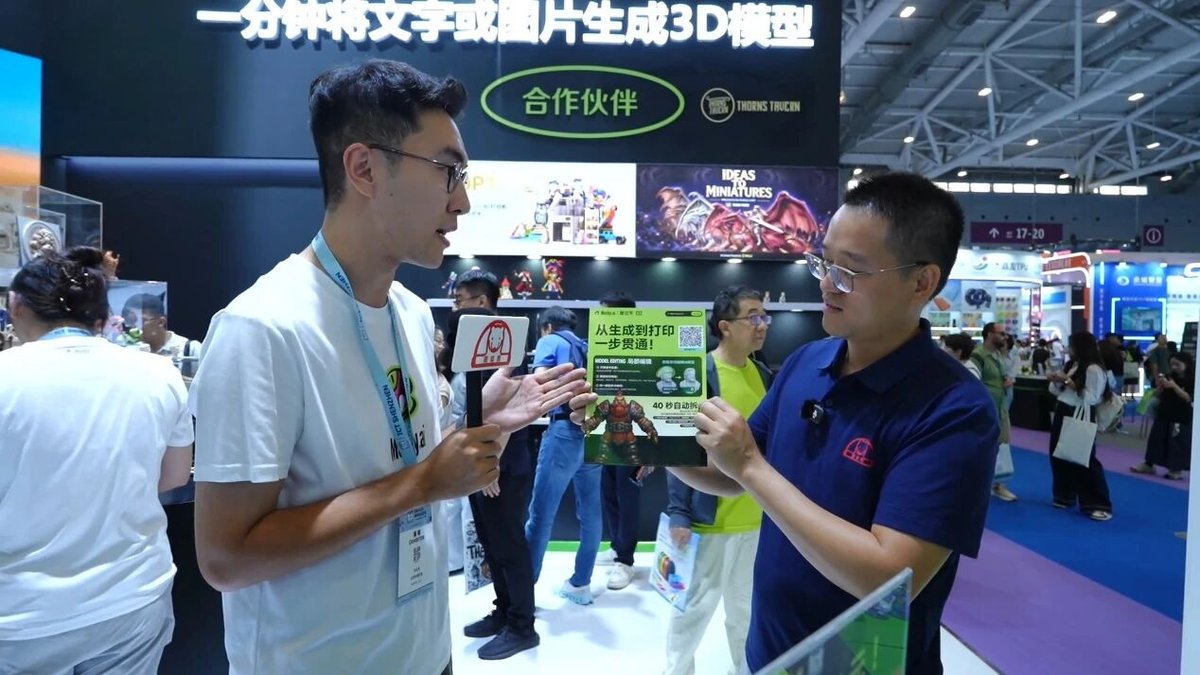
Staff said this feature is useful for 3D printing users. Previously, if users were unhappy with one part of a generated model, they either had to regenerate the whole model and hope for a better result or manually repair it in modeling software. Now, they can make a local edit and send the model directly to print without starting over.
Printability checks and automatic part separation
Another major focus at the booth was what Meshy calls capabilities "trained specifically for 3D printing." Its platform includes printability checks that automatically inspect watertightness, holes and non-manifold edges. It assesses whether a model is printable by design rather than relying on after-the-fact patching.
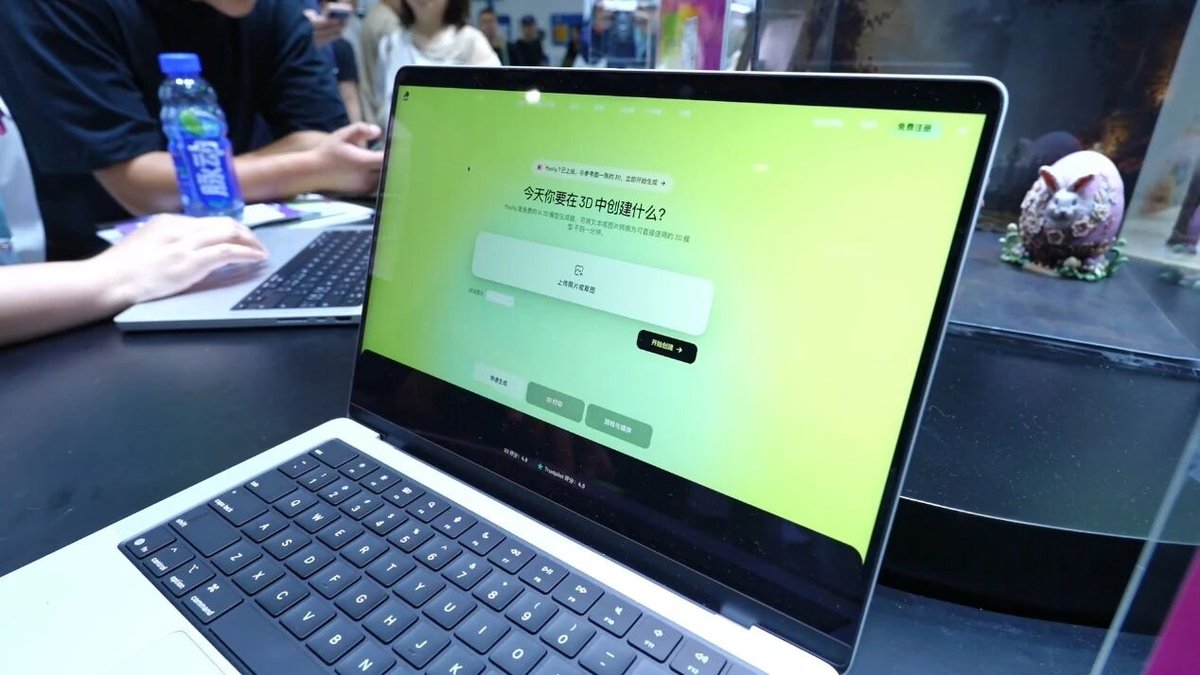
For printing large models, Meshy has also built a semantic part-separation feature. In a demonstration using a horse model, the system automatically recognized the skeletal structure—legs, belly, head and mane—and separated the model before reassembling it. The separated model can be sent to a partner printing platform in one click. Users without a printer can also use Meshy's connected print farms to have the model printed and delivered to their home.
Agent: conversational guidance for creating models with no prior experience
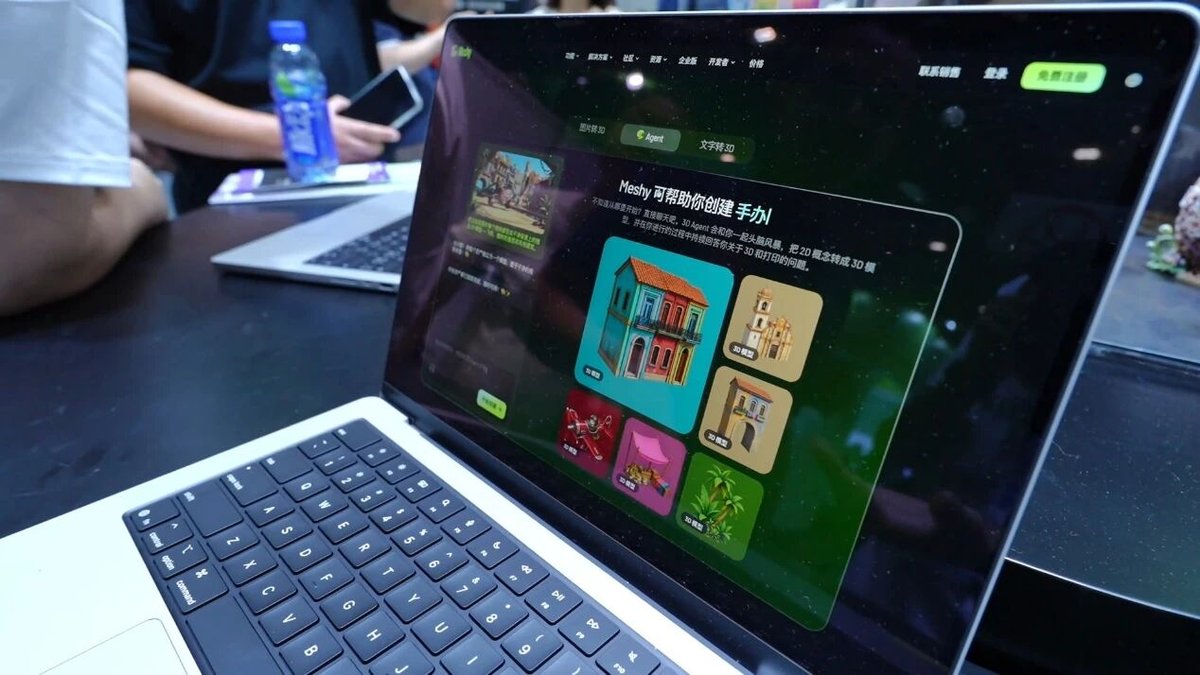
The booth also showcased an Agent feature that Meshy plans to emphasize. In simple terms, users have a conversation using images and text, and the system guides them step by step toward a model that is ready to print. Staff said that users with no modeling background can use it to create figurines, miniatures and characters. Another use case targets game developers: generating a complete set of visually consistent game assets at once and at high speed.
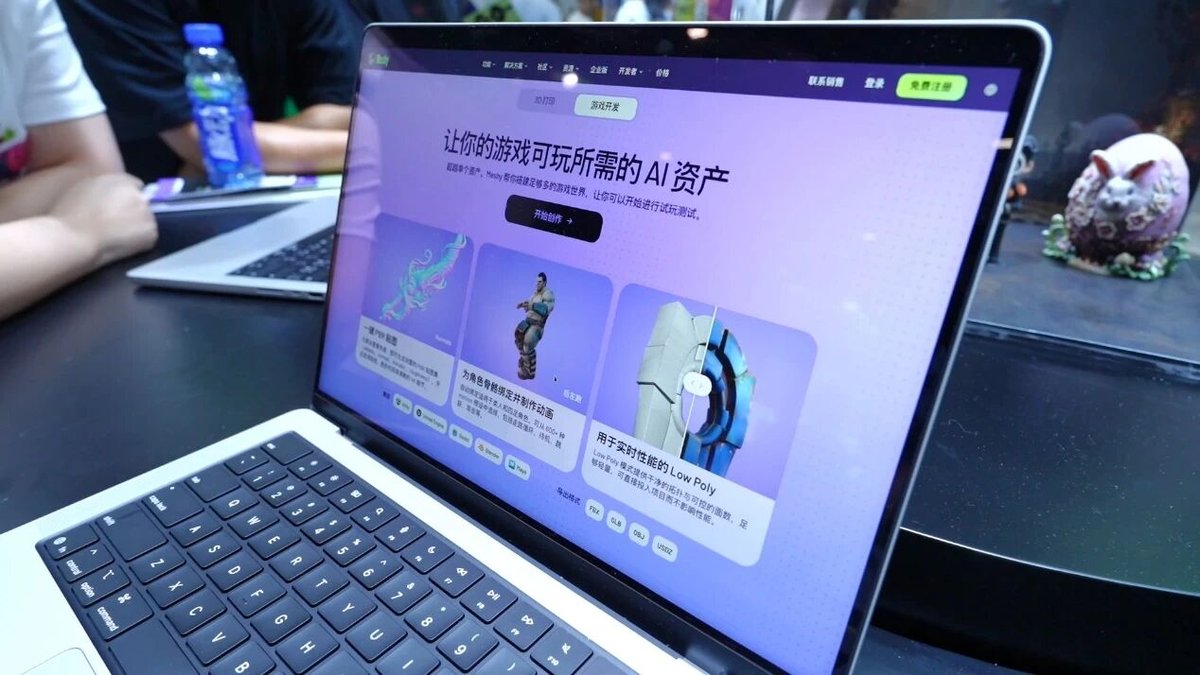
For games, Meshy also offers rigging and animation generation. It supports humanoid and animal forms, including dogs and cats, and automatically rigs joints such as the neck, knees, elbows and wrists. More than 600 preset animations are built in, and animation files can be generated and exported automatically. Low-poly export is also available specifically for game development.
Users and revenue: the user base nearly doubled in six months
During the interview, a staff member shared two figures: Meshy's platform has more than 15 million registered users, and its annual recurring revenue (ARR) surpassed $100 million on the 30th of last month.
During the exhibition, Meshy's China website (meshy.cn) offered a promotion: new users could scan a code to get their first month of membership for RMB 7, compared with the regular price of approximately $20 per month.
Nanjixiong observation
Meshy AI's feature roadmap is clear. For 3D printing, it has built out a fairly complete chain from generation and checking to part separation and printing services. Meshy Edit addresses the problem of "not liking the result but not wanting to start over." Printability checks and automatic part separation address the problem of "generating a model that cannot actually be printed." These are precisely the points where AI-generated 3D models have most often been disconnected from real-world printing.
Source: Nanjixiong 3D Printing (WeChat Official Account)
Original article:
https://mp.weixin.qq.com/s/kMP_Sh7bnOxtNYv-VTFgLg
AI-translated from an article by Kuaixiong on Nanjixiong, originally published on 2026-10-17. Text and images retain the original source attribution.
Read the original Chinese article |



 Record number | ©2024 panda3dp Team. Powered by panda3dp